Sandblasting abrasives
Reusable blasting media for glass, direct from the manufacturer
Reusable abrasive media for glass sandblasting, including brown fused alumina, brown aluminum oxide, garnet, and related blasting media. Selection depends on finish, dust control, recycling plan, and machine type.
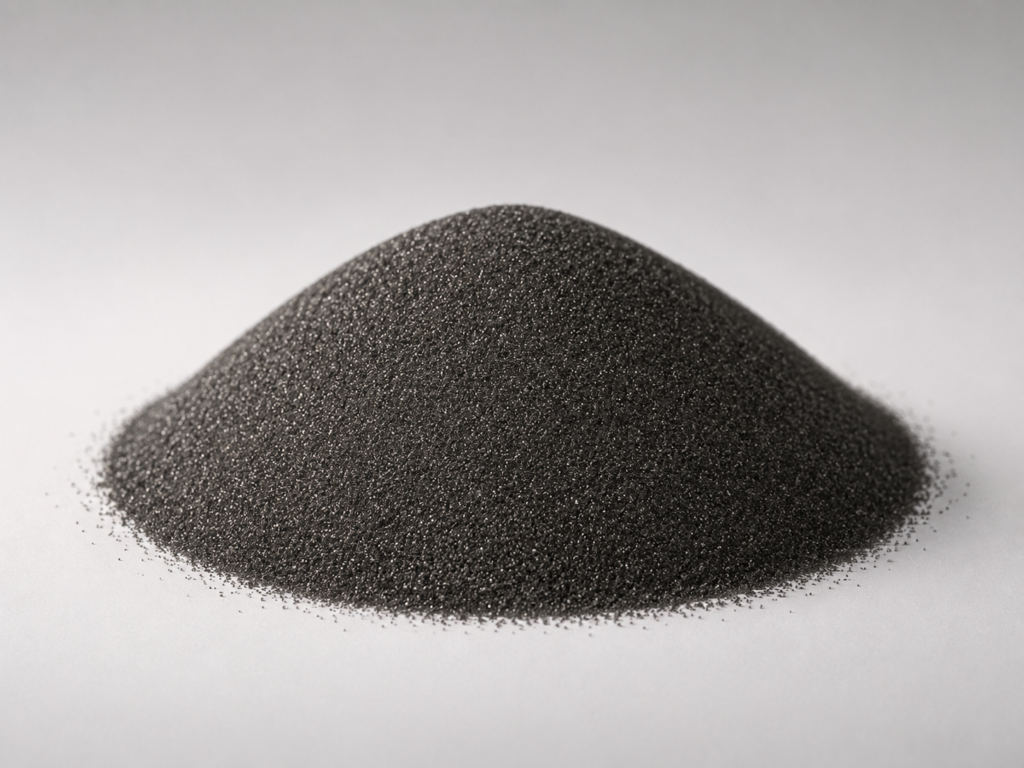
Brown fused alumina or garnet?
Both cut glass. They behave differently, and the right choice depends on what you value in your shop.
Brown fused alumina
The standard choice for most glass frosting. It is hard, angular, and fractures into fresh cutting edges as it breaks down, which means it keeps cutting through multiple cycles. That recyclability is why it dominates production sandblasting — the cost per panel is far lower than the cost per bag suggests.
Garnet
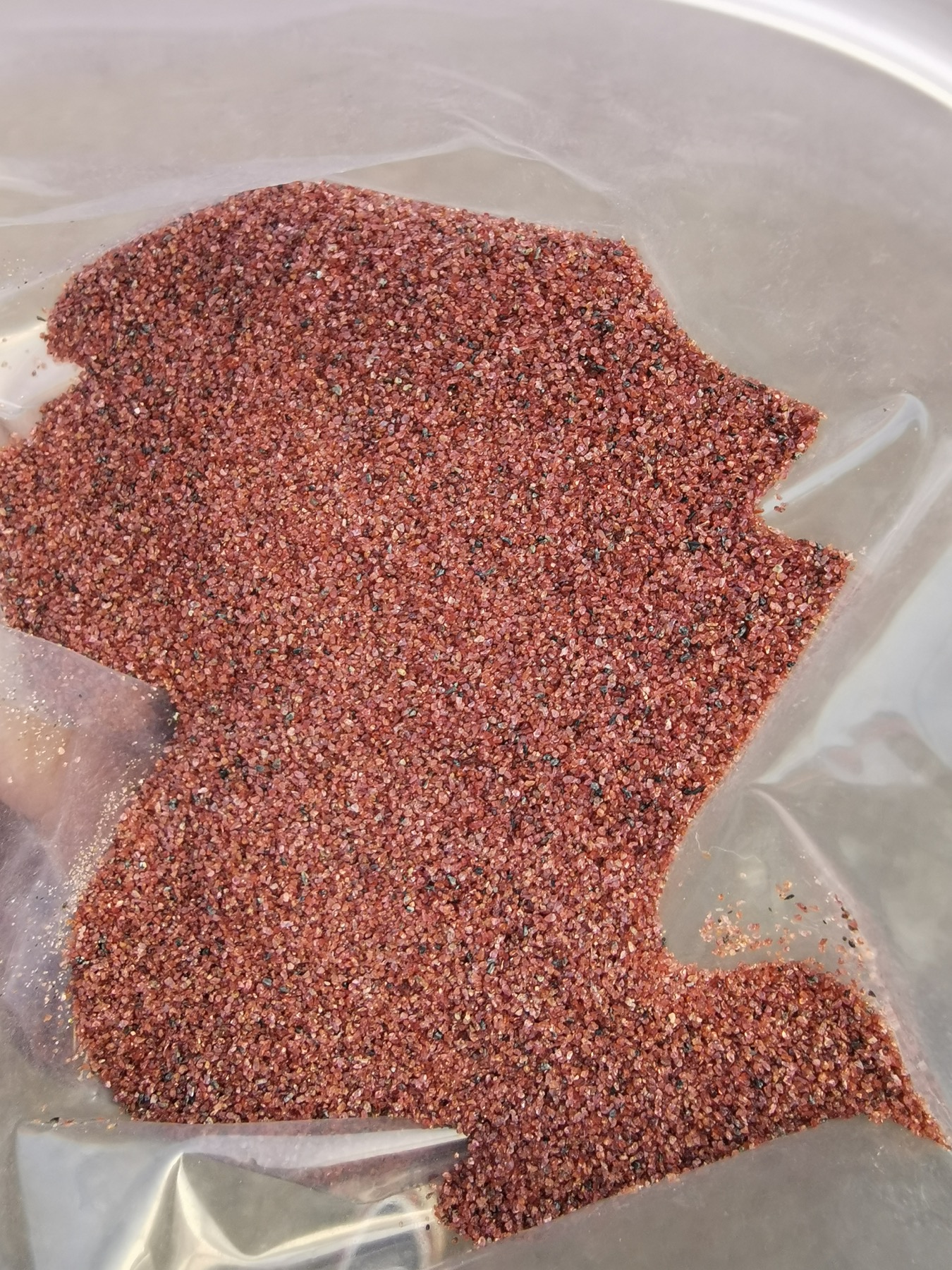
A natural mineral abrasive, softer than alumina and generally lower dust. It produces a slightly different surface character and is often preferred where dust control or a particular finish quality matters more than maximum cutting speed.
If you are unsure, tell us the finish you are trying to achieve and the machine you run. We will recommend one rather than let you buy both and guess.
Applications
- Glass frosting and decorative sandblasting
- Mirror and architectural glass surface treatment
- Horizontal and vertical glass sandblasting machines
- Reusable abrasive circulation systems
- Fine to coarse texture requirements
Main Features
Brown fused alumina
Durable reusable abrasive for common glass sandblasting work.
Garnet option
Natural garnet can be selected where customers prefer that abrasive profile.
Multiple grit sizes
Common sizes include 24#, 30#, 36#, 46#, 60#, 80#, 90#, 100#, and 120#.
Finish-driven selection
Coarser grit creates stronger texture; finer grit supports smoother frosting and detailed work.
Choosing a grit size
Grit size is the single biggest lever over how your frosted glass looks and how fast you produce it. The trade-off is consistent and predictable:
- Coarser grit cuts faster and removes more material per pass, producing a rougher, more granular frost. Good for speed and for deep carving.
- Finer grit cuts more slowly but leaves a smoother, more uniform, more “milky” frost. Preferred for premium architectural finishes where the surface is viewed up close.
Most shops standardise on one grit for their main product and keep a second on hand for special work. Changing grit means purging the machine, so having a settled default saves real time.
Recycling and when to replace
Abrasive does not wear out after one pass — it is recovered, separated from dust and fractured particles, and reused many times. Over successive cycles the particles round off and cutting slows. When you notice cycle times creeping up at unchanged pressure, that is usually the media telling you it is spent, not the machine failing.
Keeping the recovery and separation system clean has more effect on abrasive economy than almost anything else.
Technical Data
| Product names | Brown fused alumina / brown aluminum oxide; garnet abrasive; steel grit options by request |
|---|---|
| Common grit sizes | 24#, 30#, 36#, 46#, 60#, 80#, 90#, 100#, 120# |
| Alumina reference grades | Standard reusable grades and calcined no-dust style grades available by request |
| Typical use | Glass sandblasting machines and manual blasting cabinets |
| Packaging | Bags or palletized supply depending on order quantity and destination |
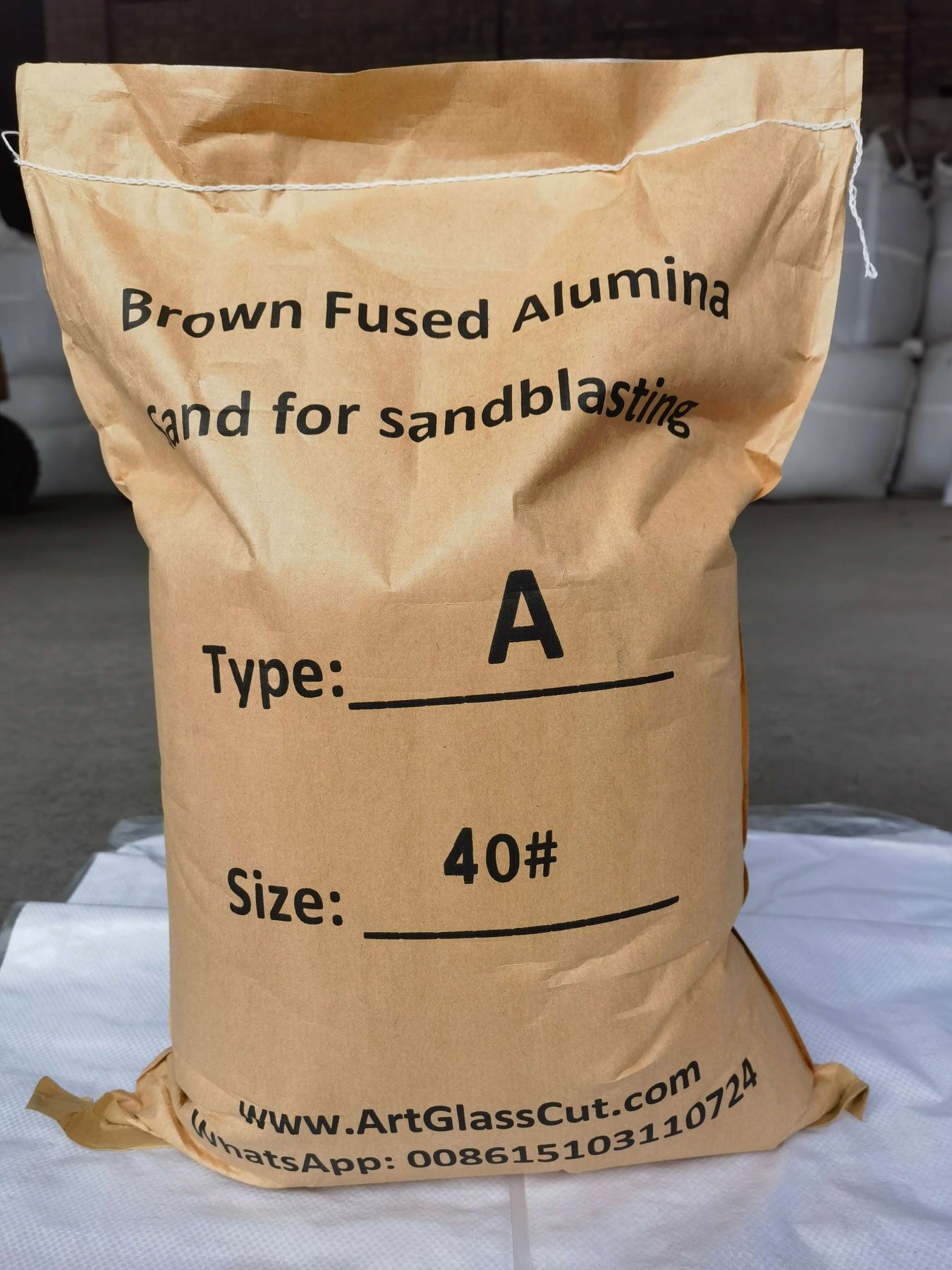
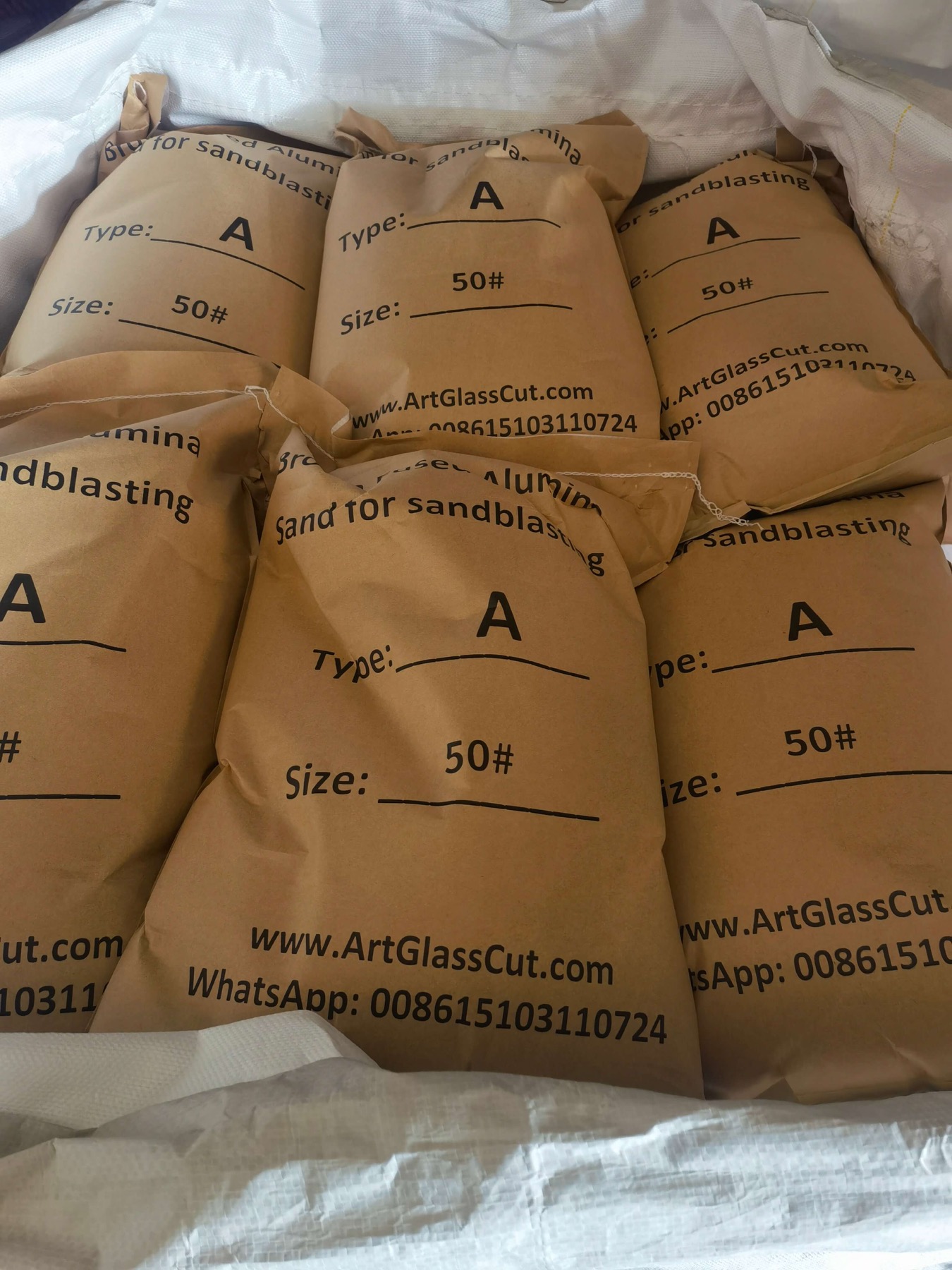
Photos and Working Examples
Consumables and Support
Tell us your glass finish target, machine model, and whether you recycle abrasive. We can recommend grit size and abrasive type for stable production.
Lead times and stocking
Abrasive is supplied to order. For a first order, plan on roughly 6–8 weeks from confirmation — production, ocean freight, customs, then domestic transit. Abrasive is heavy, which makes sea freight the only sensible option for volume.
If you reorder on a regular cycle, we will hold stock in the United States matched to your consumption, so resupply ships domestically rather than waiting on a container. Tell us roughly how much you go through and how often, and we will size it to your actual usage rather than guess.
Not sure what grit suits your finish? Request a free sample and test it on your own glass before committing to volume.
Frequently asked questions
How much abrasive will I use?
It depends on panel size, finish depth, and how well your recovery system separates usable media from dust. Tell us your machine and typical monthly output and we will estimate consumption so you can size an order sensibly.
Can I use these in any sandblasting machine?
They suit standard glass sandblasting equipment including our vertical and horizontal machines, as well as blast cabinets. If you run another brand, tell us the model and nozzle setup and we will confirm the right grit.
Do you supply shops that did not buy a machine from you?
Yes. Consumables are supplied to any glass shop regardless of whose equipment you run.
Is silica sand an option?
We do not recommend it for glass work. Silica dust carries serious respiratory health risks and is heavily regulated in U.S. workplaces. Alumina and garnet avoid that exposure while cutting better and recycling further.
What grit should I start with?
Describe the finish you want — smooth and milky, or fast and granular — along with your working pressure. We will suggest a starting grit and adjust from there rather than have you work through several bags.
Can I order a trial quantity first?
Ask when you request a quote. For a repeat consumable it is reasonable to confirm the finish on your own glass before committing to volume.
Ready to discuss your glass processing line?
Send glass size, process type, production volume, and destination country. We will recommend a practical configuration and quotation.
Related guides
- How to Choose a Glass Sandblasting Machine — the five questions that decide which model fits
- Glass Etching Workshop Equipment List — the full chain, in workflow order
- Abrasive Grit Size Chart — 24# to 120#, and the finish each produces
- Brown Fused Alumina vs Garnet — which abrasive suits your shop
- Air Pressure and Nozzle Settings — pressure, travel speed and why banding happens