Vertical, Spray-Gun Type — AS16A · AS20A · AS25A
Automatic upright sandblasting for production glass shops
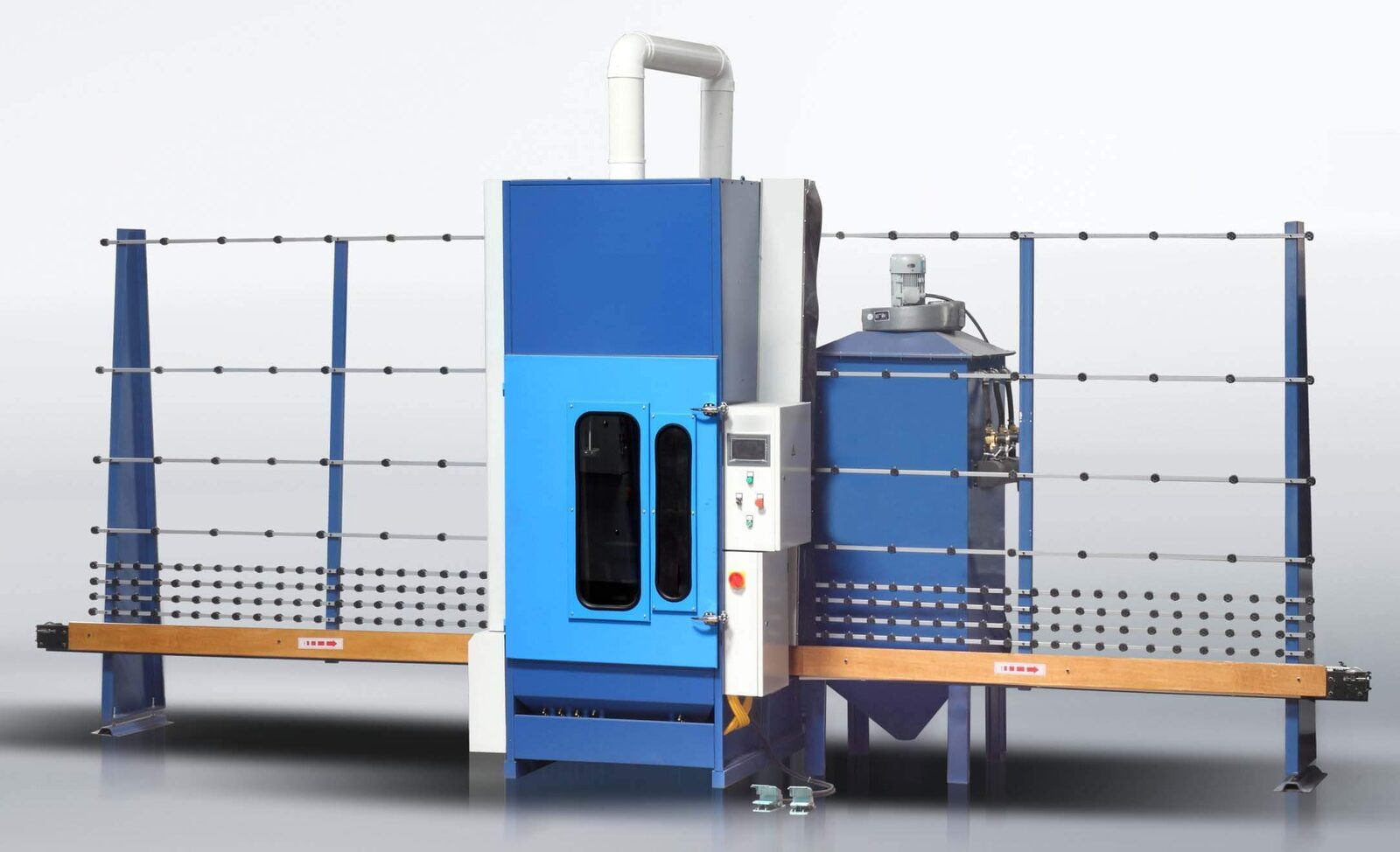
An upright automatic sandblasting machine for frosted glass, decorative patterns, partitions, shower glass, doors, and architectural glass panels. It keeps glass vertical for easier handling and cleaner production flow.
Is this the right machine for your shop?
A vertical sandblasting machine handles glass the way most glass shops already handle it — standing up. If your team is already moving panels vertically on A-frames and racks, this machine fits that workflow without forcing you to redesign your floor.
It is a good fit if you
- Process architectural glass: shower enclosures, partitions, door panels, mirrors, signage
- Work with large panels that are awkward to lay flat
- Run medium to high volume and need repeatable, consistent frosting
- Have limited floor space — an upright machine occupies far less area than a horizontal line of comparable capacity
- Do both full-surface frosting and masked decorative patterns
It is probably not the right fit if you
- Mainly do small items — drinkware, awards, plaques. A blast cabinet suits that work better and costs a fraction as much.
- Produce occasional one-off pieces rather than steady production
- Need to blast non-glass substrates as your primary work
If you are unsure which side of that line you fall on, tell us what you make and how much of it. We would rather talk you out of the wrong machine than sell you one that sits idle.
Applications
- Full-surface frosted glass
- Partial decorative sandblasting with masking film
- Shower glass and partition glass
- Door panels, mirror borders, and signage glass
- Medium to high volume glass workshops
How vertical glass sandblasting works
Glass is loaded upright onto the conveyor and enters the blast chamber. Inside, the machine works on two axes: the conveyor advances the panel horizontally in steps, while the nozzle carriage sweeps vertically across the working height. Abrasive is driven against the glass at controlled pressure, fracturing the surface into a uniform matte texture — that is what produces the frosted appearance.
How the machine moves: X-axis steps, Y-axis sweep
Understanding the motion makes the rest of the machine easier to judge. Two movements combine to cover the panel:
- X-axis — the glass moves. The conveyor carries the panel horizontally through the chamber, advancing it one increment at a time rather than running it past the guns in a single continuous motion.
- Y-axis — the nozzles move. While the panel is held at each position, the spray-gun carriage travels up and down over the working height, blasting a full-height vertical band of glass.
The cycle then repeats: the glass indexes forward by one step, the guns sweep again, and the next vertical band is blasted alongside the previous one. Successive bands are set to overlap slightly, so the finished surface reads as one continuous frost rather than a series of stripes.
Two practical consequences follow from this. First, coverage is even over the entire glass height in a single pass — the operator never repositions or re-hangs the panel to reach the top. Second, the relationship between step distance and sweep speed is what governs evenness. If the step is too large for the spray pattern, the overlap between bands thins and faint vertical banding can appear; correct step and pressure settings eliminate it. Our guide on air pressure and nozzle settings covers how to dial this in.
Note that this motion blasts the full surface of the panel it passes over. Where you want areas of the glass to stay clear, that is achieved with masking film applied before blasting — the film protects those areas while the exposed glass frosts. The machine supplies consistent, uniform coverage; the film defines the design.
Three variables determine the result: abrasive grit size, working pressure, and travel speed. Coarser grit and higher pressure cut faster but leave a rougher texture. Finer grit and slower travel produce a smoother, more even frost. Most shops settle on one or two proven combinations for their standard products and rarely change them.
Spent abrasive falls into the recovery system, gets separated from glass dust and broken media, and returns to the hopper for reuse. Dust goes to the collector. This is why abrasive cost per panel is far lower than the price per bag suggests — the media is recycled many times before it stops cutting.
Full-surface frosting versus masked patterns
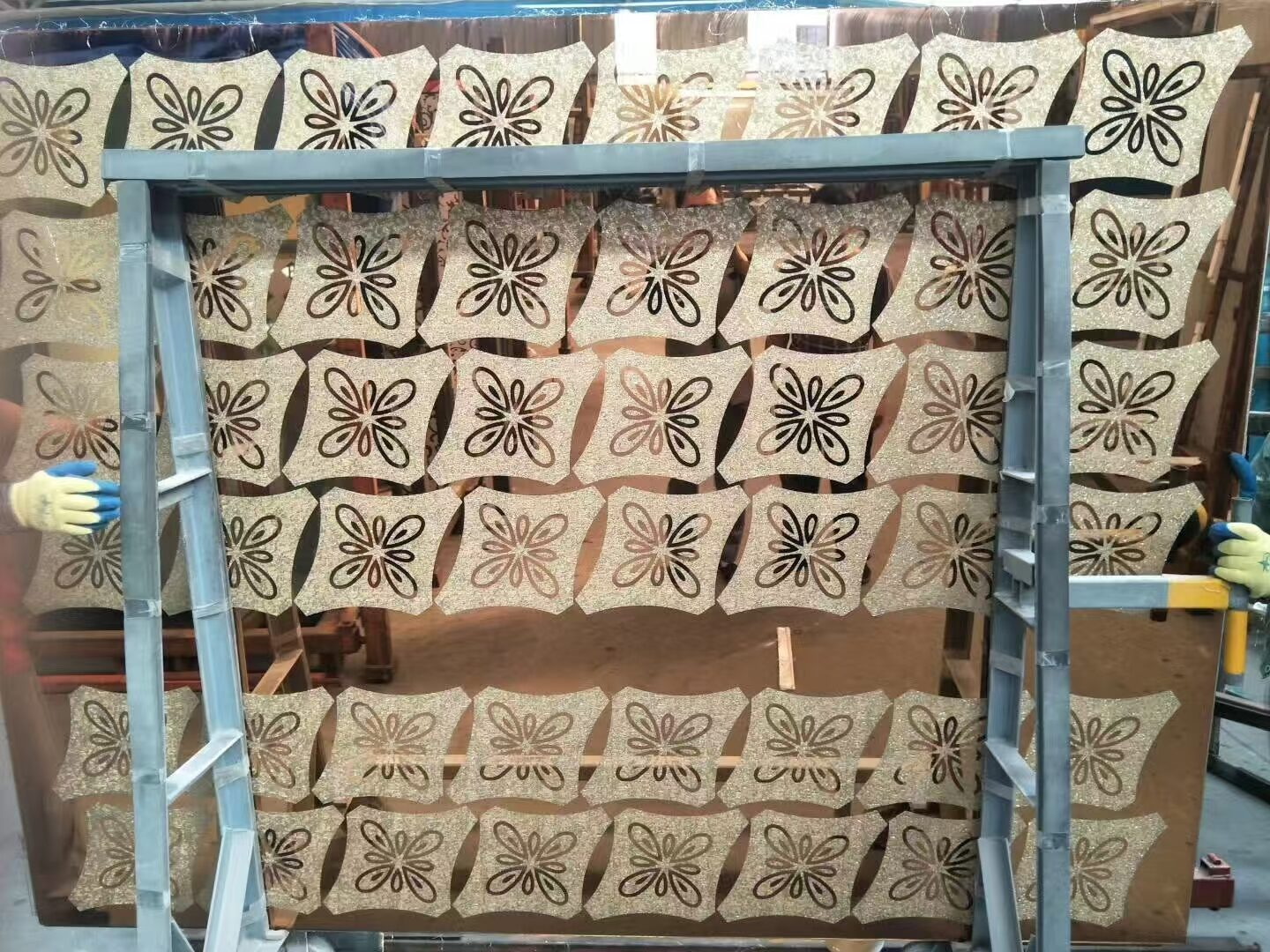
For an evenly frosted panel, the glass goes through bare. For logos, patterns, or partial frosting, the areas you want to stay clear are covered with sandblast resist masking film, cut to shape on a film cutting plotter. The film absorbs the abrasive; the exposed glass frosts. Peel the film and the design is permanent in the glass.
Main Features
Automatic and manual blasting
Typical configuration includes three automatic spray guns plus one manual spray gun.
Vertical handling
Designed around upright glass movement to reduce handling and match glass shop workflow.
Dust collection
Dust removal system helps keep abrasive circulation and workshop conditions more stable.
Serviceable wear parts
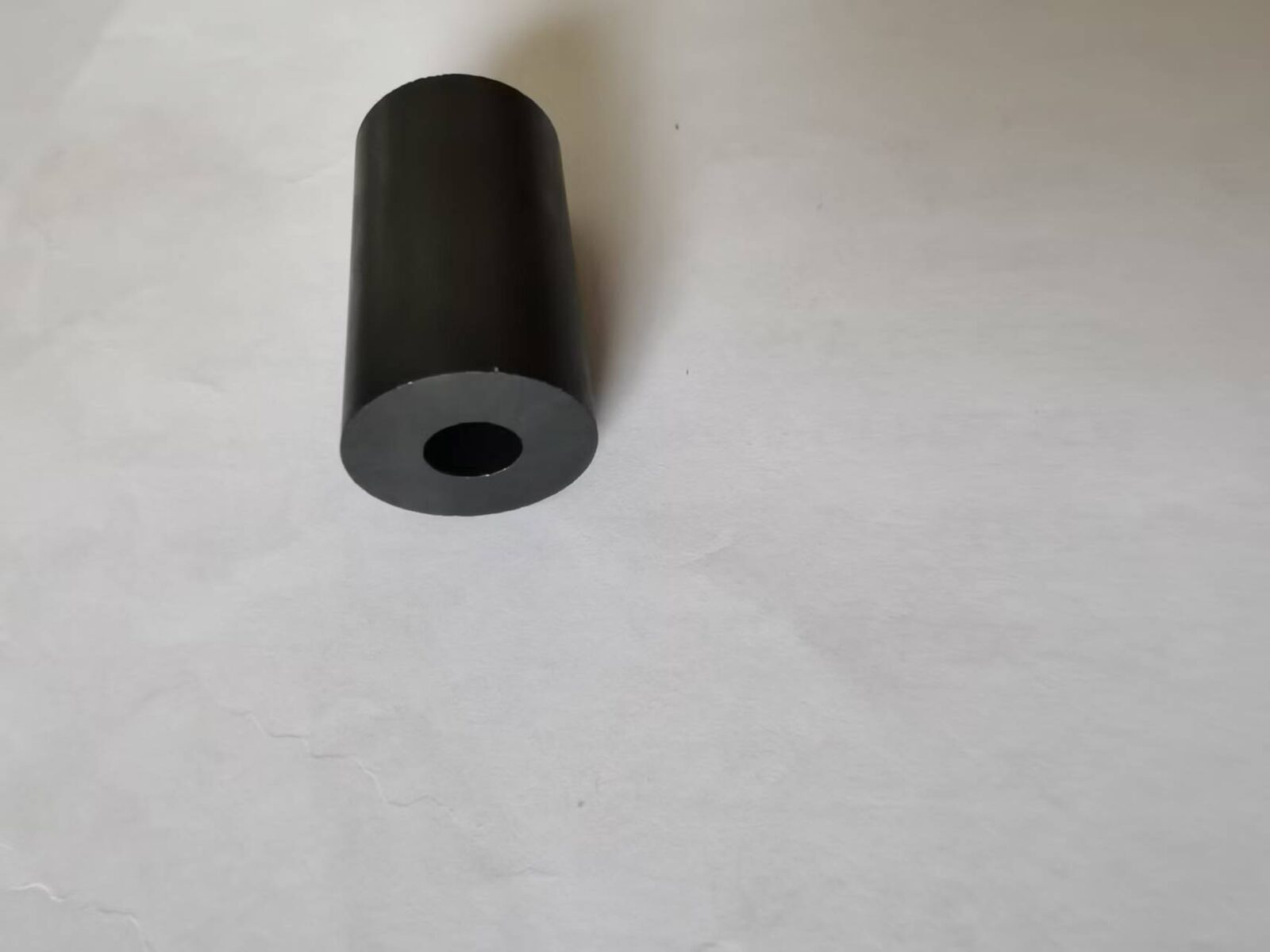
Nozzles, sand tubes, air tubes, valves, belts, PLC/touch screen parts, and spray guns are available.
Models
| Model | Max. glass height | Max. glass length | Machine footprint (L × W × H) | Gross weight |
|---|---|---|---|---|
| AS16A | 1600 mm / 63 in | 3000 mm / 118 in | 4600 × 1500 × 2300 mm 181 × 59 × 91 in | 1000 kg / 2200 lb |
| AS20A | 2000 mm / 79 in | 3660 mm / 144 in | 6800 × 1500 × 2800 mm 268 × 59 × 110 in | 1200 kg / 2650 lb |
| AS25A | 2500 mm / 98 in | 3660 mm / 144 in | 6800 × 1500 × 3300 mm 268 × 59 × 130 in | 1300 kg / 2870 lb |
Glass height is the number that decides the model. Pick from the tallest panel you actually run, then check that the footprint fits your floor. Glass travels through the cabinet side to side, so machine length is a floor-space question, not a capacity one.
A manually operated model, the AS15M, is also available: 1500 × 2000 mm maximum glass, one hand-held gun, 1 kW, 400 kg, and it runs on a 10 HP compressor rather than 30 HP. It suits shops with low or irregular volume, or work that is too varied to program.
Blasting panels taller than the machine’s rated height
The rated glass height is the tallest panel the machine can frost in a single pass — it is not a hard limit on the panel you can physically load. These machines are open-top: the blast chamber has no fixed roof, so a panel taller than the rated height simply extends above the chamber while its lower portion is being blasted.
That makes a two-pass method possible for occasional oversize work. Take a 2000 × 2000 mm panel on a VS1630A (1600 mm rated height) as an example:
- First pass — load the panel upright and blast the lower 1600 mm. The remaining 400 mm stands above the chamber opening, untouched.
- Rotate the panel 180° — turn it end over end, so the unblasted 400 mm strip is now at the bottom, inside the blast zone.
- Second pass — blast the remaining strip, carrying the pass slightly into the area already frosted so the two zones meet.
The same approach applies to any panel up to roughly twice the rated height, provided your shop can safely handle and rotate the glass.
What to watch for
The overlap band is the one thing that decides whether this looks professional. Sandblasting is cumulative — glass that receives abrasive twice etches deeper and reads slightly whiter than glass blasted once. If the two passes simply butt together, you get a visible line; if they overlap heavily at full pressure, you get a bright band. The fix is to feather the joint: reduce pressure or increase travel speed through the overlap zone so the density blends rather than doubles. Run a test panel first and settle on a setting before you commit customer glass.
Best suited to full-surface frosting. A uniformly frosted panel hides a well-feathered joint very effectively. Masked decorative work is harder — a design crossing the joint has to register precisely between the two passes, and any misalignment shows. If your pattern can be positioned so it falls entirely within one pass, the job becomes straightforward.
Handling and cycle time. A 2000 × 2000 mm panel is heavy and awkward. Rotating it safely needs the right lifting equipment and, in most shops, two operators. You are also running the panel twice, so plan on roughly double the blasting time plus the handling in between.
When to size up instead. Two-pass blasting is a practical solution for the occasional oversize panel — not a substitute for buying the right machine. If panels over 1600 mm are a regular part of your work, the VS2036A (2000 mm) or VS2536A (2500 mm) will frost them in one pass, with no joint to manage and roughly half the cycle time. Tell us the size mix you actually run and we will tell you honestly whether two-pass is sensible for you or whether the taller machine pays for itself.
A manually operated model, the VS1520M (1500 mm glass height, 2000 mm long), is also available for shops with lower or irregular volume. Ask us if that fits your work better than an automatic machine.
Inside the machine
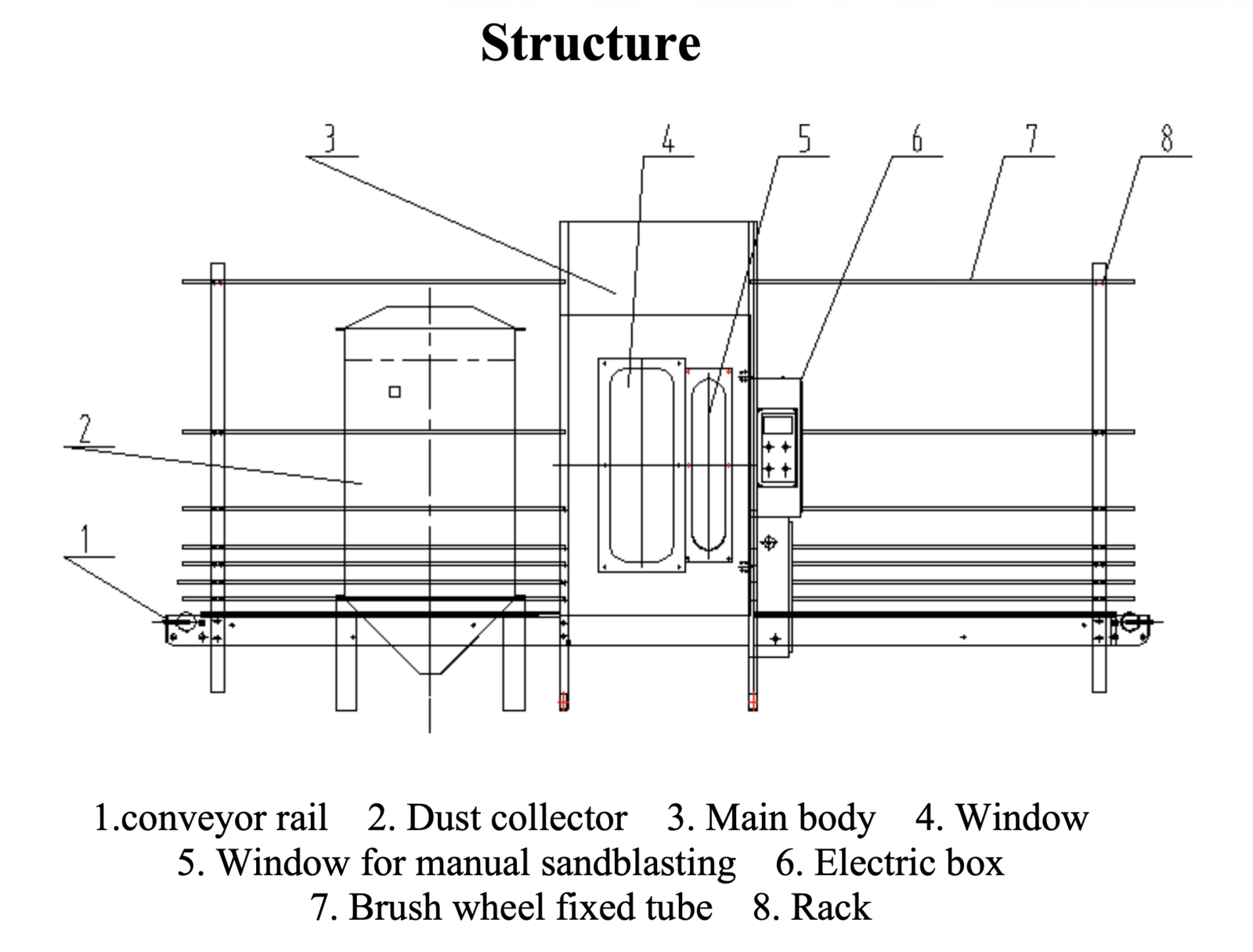
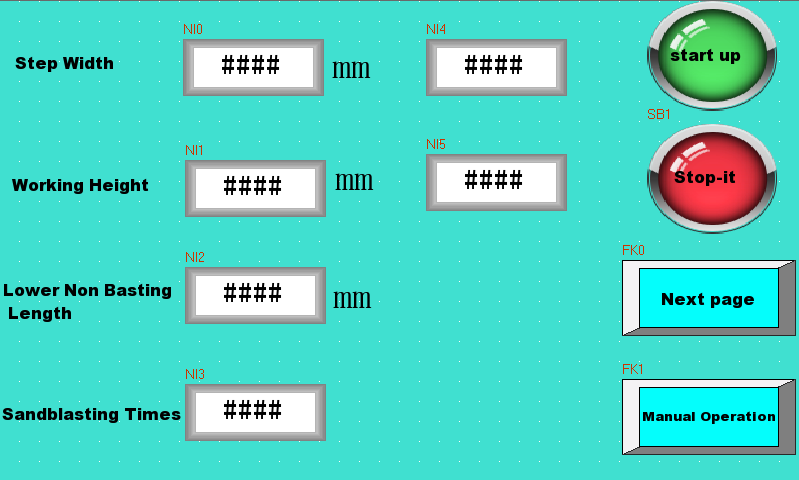
The three automatic guns ride on a carriage that travels up and down inside the cabinet while the glass is held still. Between passes the conveyor steps the panel forward by the width you set on the touchscreen. That is what produces an even frost across a large sheet instead of visible banding.
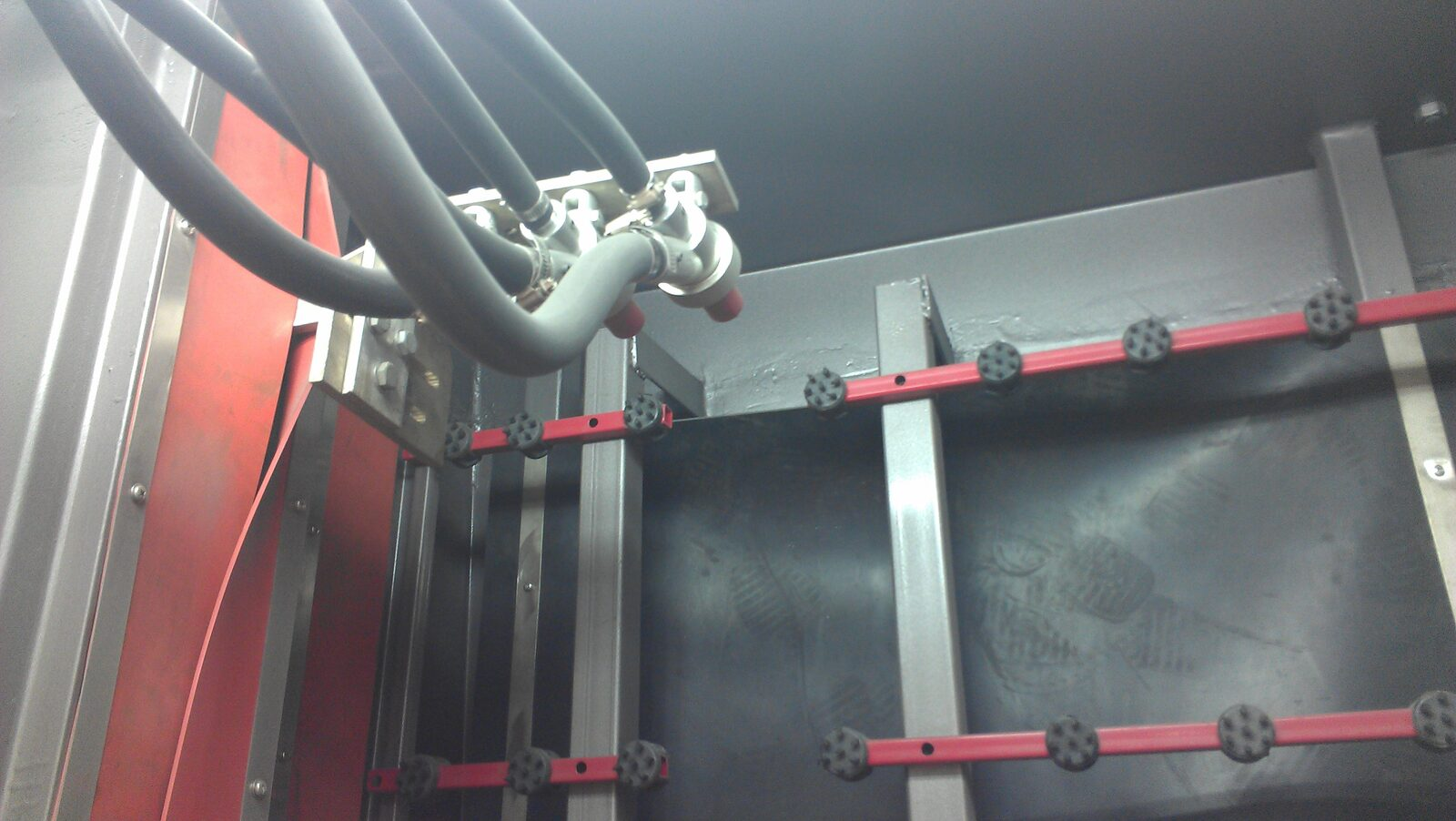
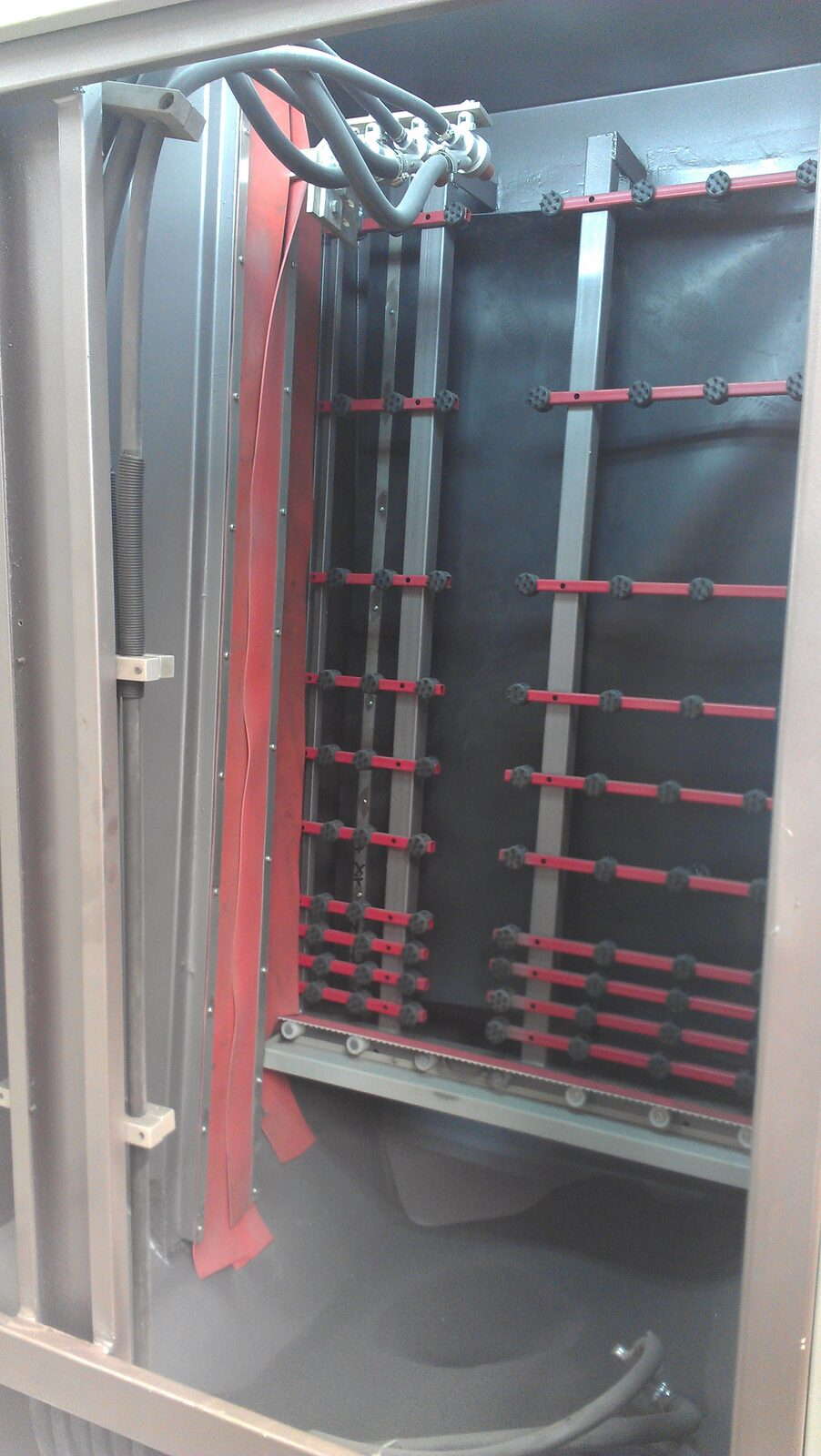
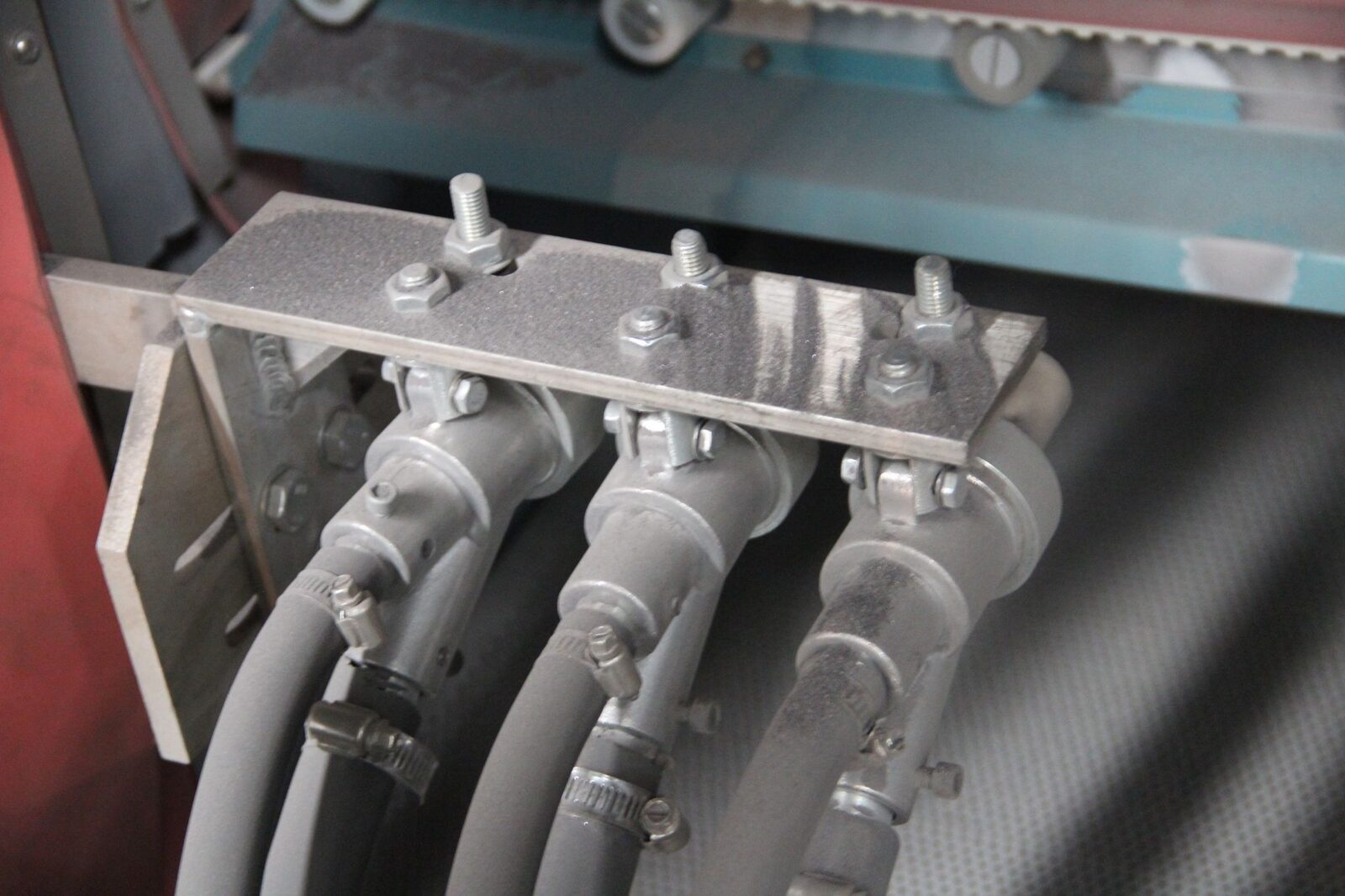
The lift drive sits outside the cabinet
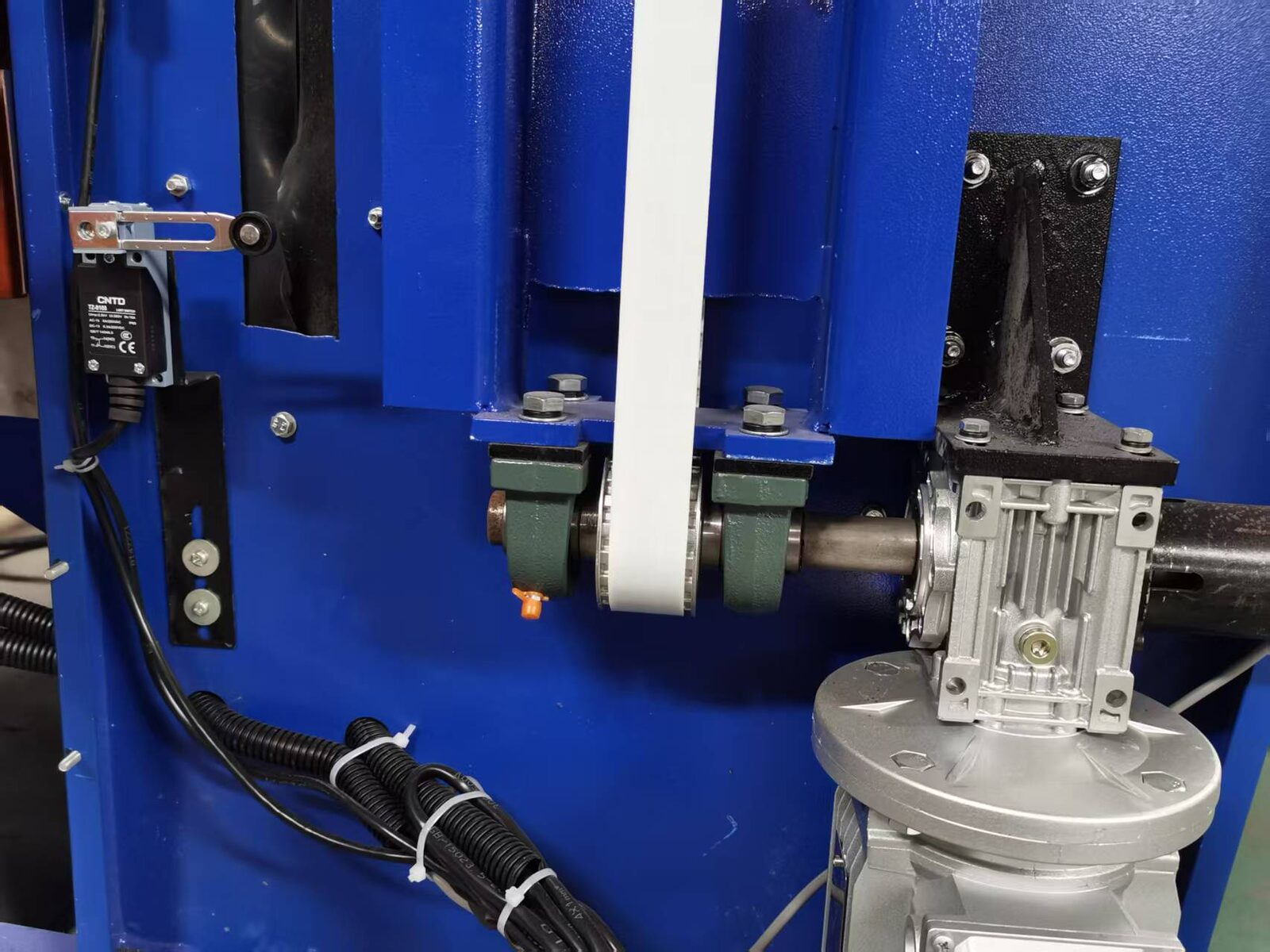
Both the gun lift and the conveyor run on synchronous belts, and the lift mechanism is mounted on the outside of the cabinet rather than inside it. Abrasive never reaches the bearings, belts or gearbox. That single design decision is the main reason this machine needs less attention than cabinet designs with the drive in the blast path — and it is why servicing it does not mean climbing inside.
Controls
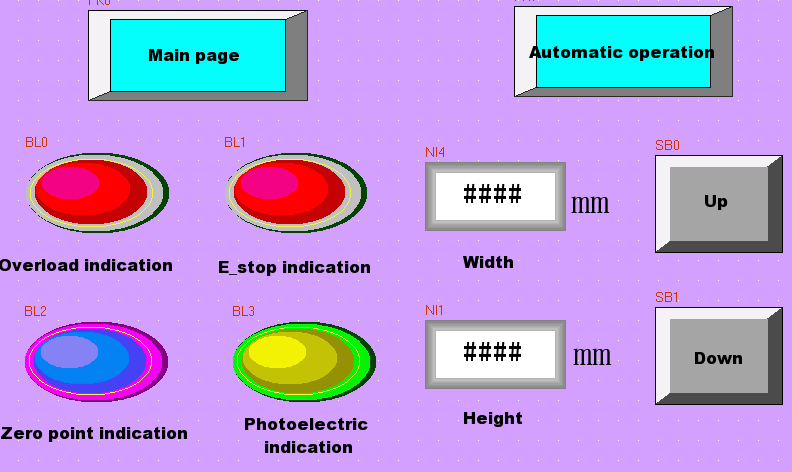
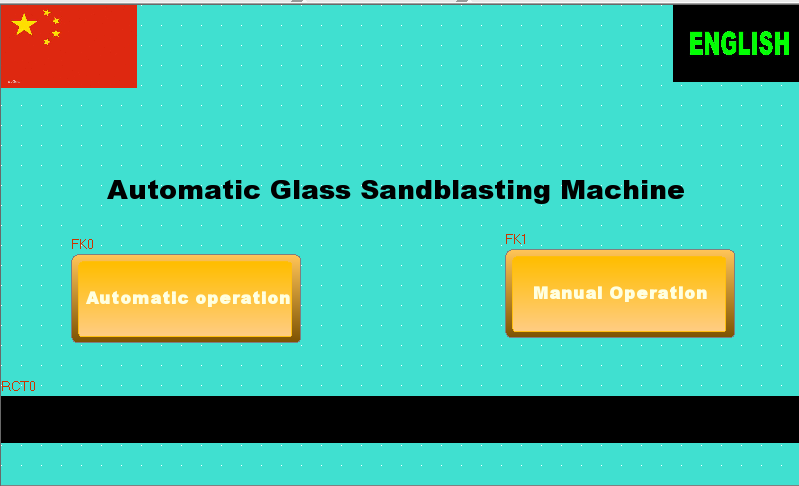
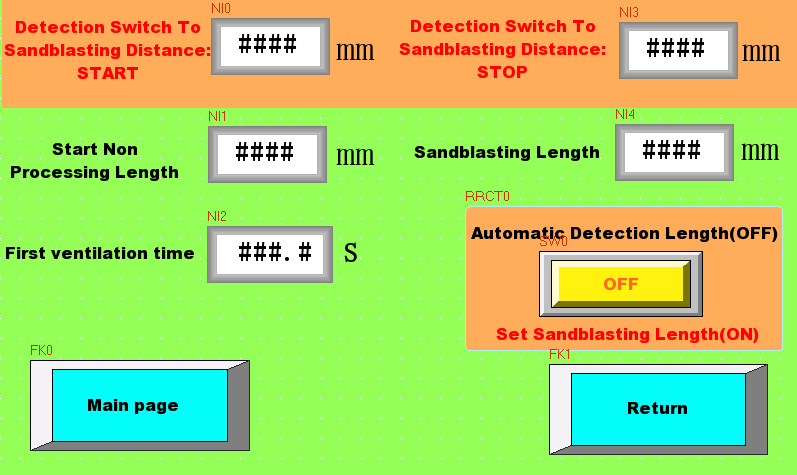
Operation is through a KINCO touchscreen driven by a Mitsubishi PLC. The operator sets step width, working height, how much of the bottom edge to leave unblasted, and how many passes per step — then presses start. Settings hold between jobs, so repeat work is repeatable.
Technical data
Identical across AS16A, AS20A and AS25A.
| Automatic spray guns | 3 |
| Manual spray gun | 1 (hand-held, inside the cabinet) |
| Nozzle material | Boron carbide |
| Nozzle bore | 8 mm / 0.31 in |
| Glass thickness | 3 – 50 mm / 1⁄8 – 2 in |
| Minimum glass size | 250 × 500 mm / 10 × 20 in |
| Throughput | 25 m²/h · approx. 270 sq ft/h |
| Gun lift speed | 8 m/min · 26 ft/min |
| Conveyor speed | 3.6 m/min · 11.8 ft/min |
| Conveyor height | 480 mm / 18.9 in |
| Total power | 3.5 kW |
| Motors | 0.37 kW gun lift · 0.75 kW conveyor · 2.2 kW dust extraction |
| Working pressure | 0.6 – 0.8 MPa · 87 – 116 psi |
| Air consumption | ≥ 3 m³/min · ≥ 106 CFM |
| Dust extraction airflow | 1633 – 3517 m³/h · 960 – 2070 CFM |
| Dust collection | Cartridge filter, automatic pulse cleaning |
| Abrasive consumption | 0.5 kg/m² · 0.10 lb/sq ft |
| Noise | 75 dB(A) at 1 m |
| Drive | Synchronous belt, both gun lift and conveyor |
| Controls | Mitsubishi PLC FX3SA-14MR with KINCO GL070 touchscreen |
| Operating conditions | 3 – 40 °C / 37 – 104 °F, 30 – 95% RH non-condensing |
Throughput is measured on full-surface frosting at 50 Hz, and masked areas count toward the processed area. Real output depends on finish depth and how much of each panel you are actually blasting.
Electrical supply
The machine draws only 3.5 kW — about 15 A on a 208V three-phase supply. It does not need a heavy service.
| Market | Standard build |
|---|---|
| North America | 220V · 3-phase · 60 Hz — runs on both 208V and 240V shop supplies |
| China and most of Asia | 380V · 3-phase · 50 Hz |
| Europe, Middle East, Africa, Australia | 415V · 3-phase · 50 Hz |
Other voltage and frequency combinations are built to order at no additional machine cost and no change to lead time. Three-phase only — this machine cannot be supplied for a single-phase supply.
If your plant distributes 480V only, you can either order the 480V build or feed the machine through a small step-down transformer. At 3.5 kW a 5 kVA transformer is enough, and it is usually the faster route.
Size your electrical service around the air compressor, not the machine. A 22 kW (30 HP) compressor draws roughly 80 A at 208V — more than five times the machine itself. That is the load your electrician needs to plan for.
Compressed air — work this out before you order
The machine does not include an air compressor. This is the single most expensive thing to get wrong, so the numbers are here in full.
| Requirement | Specification |
|---|---|
| Air consumption | ≥ 3 m³/min · ≥ 106 CFM, continuous with all three guns running |
| Working pressure | 0.6 – 0.8 MPa · 87 – 116 psi |
| Recommended compressor | 22 kW · 30 HP |
| Air receiver | ≥ 1 m³ · ≥ 265 US gal |
| Also required | Aftercooler, oil/water separator, shut-off valve, compressed air filter |
A 30 HP compressor is a real capital item — in the U.S. typically $4,000 to $8,000 plus installation. Budget for it at the same time as the machine, not afterwards. If you already own a compressor, tell us the model and we will confirm whether it is sufficient before you order.
Dry air matters as much as volume. Moisture in the line makes abrasive clump and clog the sand tubes, which shows up as banding on the glass and looks like a machine fault when it is not.
Dust collection
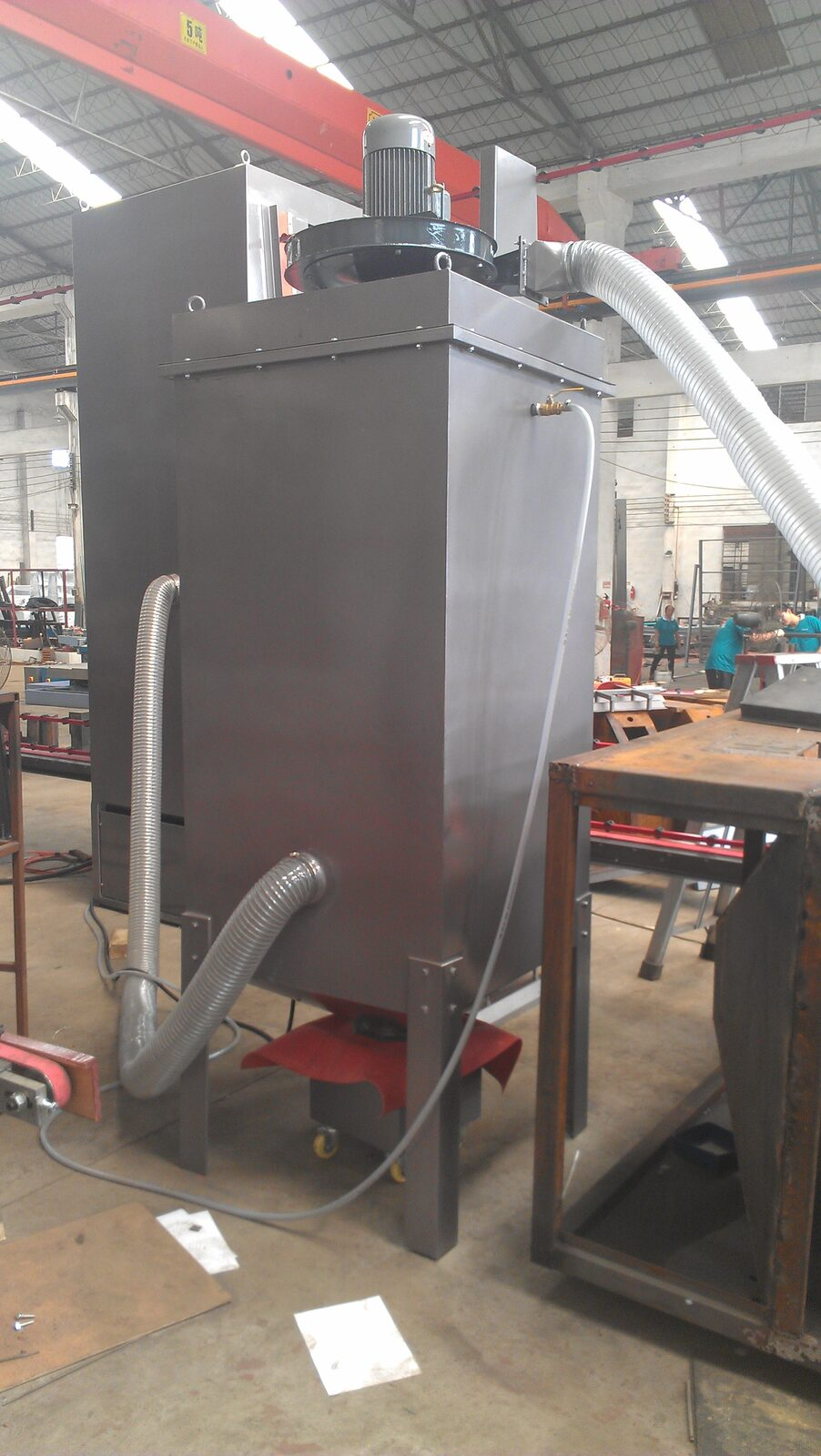
A cartridge dust collector is included and ships with the machine. It self-cleans by reverse pulse, so filters are not something an operator has to remember to service daily.
Airflow is 1633 to 3517 m³/h (960 to 2070 CFM). Spent abrasive drops into the recovery hopper, gets separated from glass dust and broken media, and returns for reuse. Fines go to the collector. This recirculation is why abrasive cost per panel is far lower than the price per bag suggests.
Which abrasive should you run?
Both brown fused alumina and silicon carbide work in this machine, and the finish is very close. Blasting here is a siphon-fed air stream carrying grit against the glass — the medium matters less than most buyers expect.
| Brown fused alumina (BFA) | Silicon carbide (SiC) | |
|---|---|---|
| Finish | Even matte frost | Even matte frost, very slightly cleaner |
| Cutting rate | Comparable | Comparable |
| Hardness | Lower | Higher — fractures less, lasts longer per charge |
| Airborne dust | More | Less |
| Cost | Baseline | Roughly 2 to 3 times BFA |
Most shops should run BFA. Silicon carbide is worth it only where dust is a specific problem or where the longer media life offsets the price in your particular operation. We will not pretend the finish difference justifies paying three times as much, because it does not.
Grit size, working pressure and travel speed control the result far more than the choice of medium. See the abrasive grit size chart and the pressure and nozzle settings guide.
What it costs to run
Two ongoing costs: abrasive and wear parts. Both are small relative to the value of the glass going through the machine, but you should see the actual figures.
Abrasive
Consumption is 0.5 kg per m² (0.10 lb per sq ft) of processed glass, after recirculation. Multiply by your local abrasive price to get cost per panel — we would rather you use your own delivered price than a number we invented.
Wear parts
| Part | Fitted per machine | Service life | Typical annual usage |
|---|---|---|---|
| Spray gun | 4 | 700 h | 12 |
| Boron carbide nozzle | 4 | 300 h | 20 |
| Sand tube | 12 m | 600 h | 50 m |
| Air tube | 11 m | 1000 h | 22 m |
| Solenoid valve | 4 | — | 4 |
At current prices that is roughly US$600 per year in wear parts for a machine in steady production, ex-works, freight not included. Nozzles and guns are the bulk of it.
Warranty, parts and support
Two-year warranty
Electrical components and motors are covered for two years — twice the one-year term that is standard for this class of machine. That includes the PLC, touchscreen, contactors, encoders and all three motors.
Not covered: consumables and wear parts (guns, nozzles, tubes, belts, brushes), and damage from misuse or from running the machine outside its stated air, power or environmental limits.
Getting parts
Wear parts ship by air from our factory, typically 3 to 5 days door to door. They are small and light, so air freight is practical rather than a last resort.
We will tell you plainly: most parts for this machine are made to our own specification and come from the factory, not from a local industrial supplier. The nozzles, guns and sand tubing are not off-the-shelf items you can buy at a U.S. distributor. What we can promise is that they are inexpensive and that they ship by air from our factory, so you are not waiting on ocean freight when a nozzle wears out.
What ships with the machine
100 kg of brown fused alumina so you can commission the machine and run your first jobs without waiting on an abrasive order. Everything else — guns, nozzles, tubes — is already fitted and new.
Support
Installation guidance, operator training and troubleshooting come from the U.S. during U.S. business hours, by phone, WhatsApp or video. See Warranty & Support for full terms.
We build these machines ourselves
Not a trading company reselling someone else’s equipment. That matters when you need a part, a wiring diagram, or an answer about a machine you bought three years ago.
Shipping, crating and installation
| Model | Crate (L × W × H) | Gross weight |
|---|---|---|
| AS16A | 2420 × 1800 × 2200 mm | approx. 1350 kg |
| AS20A | 2800 × 1800 × 2200 mm | approx. 1350 kg |
| AS25A | 3300 × 1800 × 2200 mm | approx. 1350 kg |
HS code 8424.30.0000. ArtCut handles customs clearance. Build time is typically 10 to 30 days, plus 20 to 30 days ocean transit depending on coast. Full detail on Shipping & Lead Times.
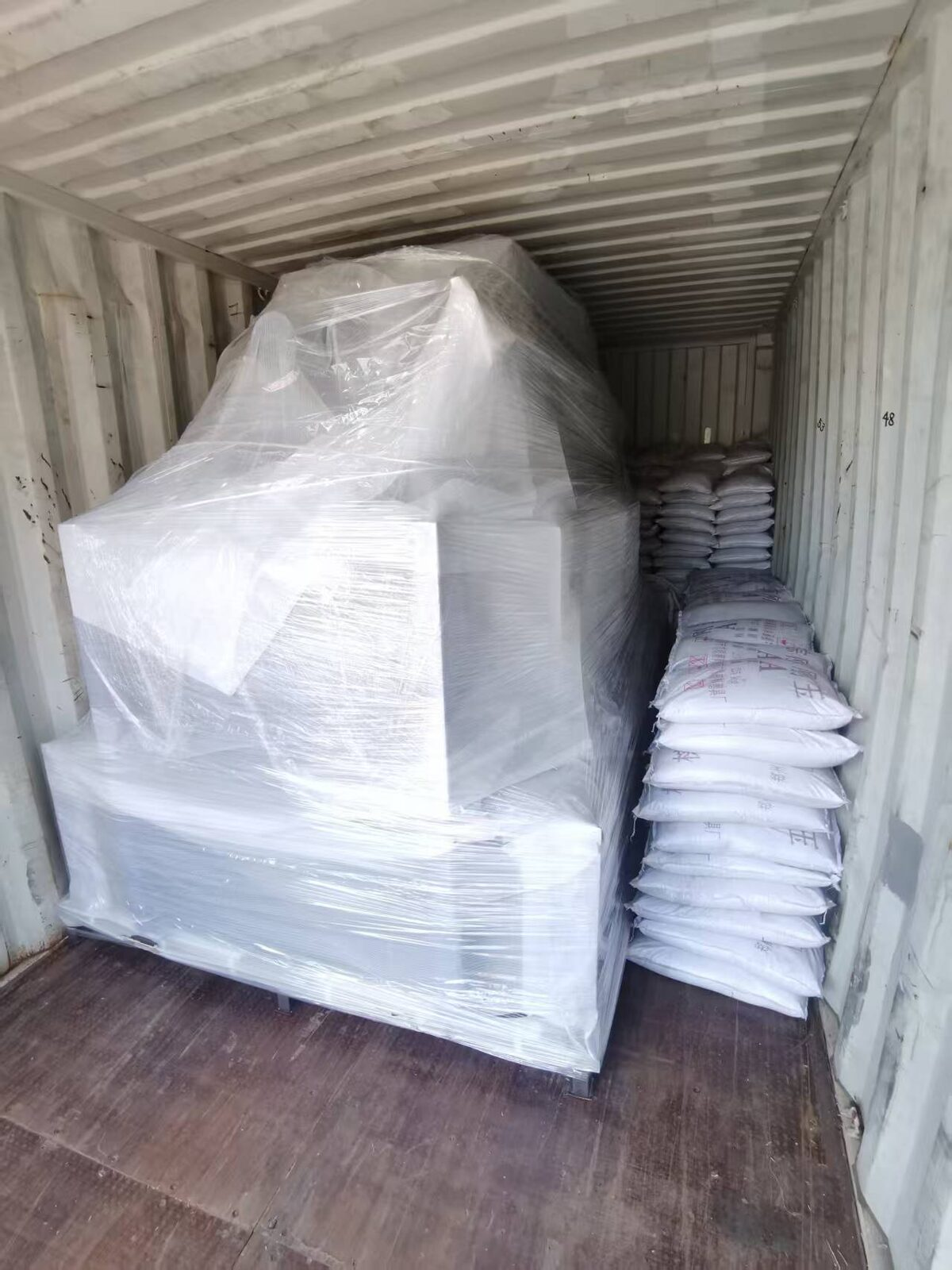
Installation
The machine ships partly disassembled and goes back together on site. Two people, about four hours, following the illustrated installation guide. No specialist installer, no factory technician on a plane.
You will need a hoist or forklift rated 1000 kg or more, a solid level floor, and the compressed air supply already in place. Slings pass either side of the dust collector, above the centre of gravity.
One thing to check on first power-up: press Down on the touchscreen and confirm the guns actually travel down. If they go up instead, two of the three supply phases are swapped — power off and exchange any two. It takes a minute and it is the single most common first-day mistake.
What it produces
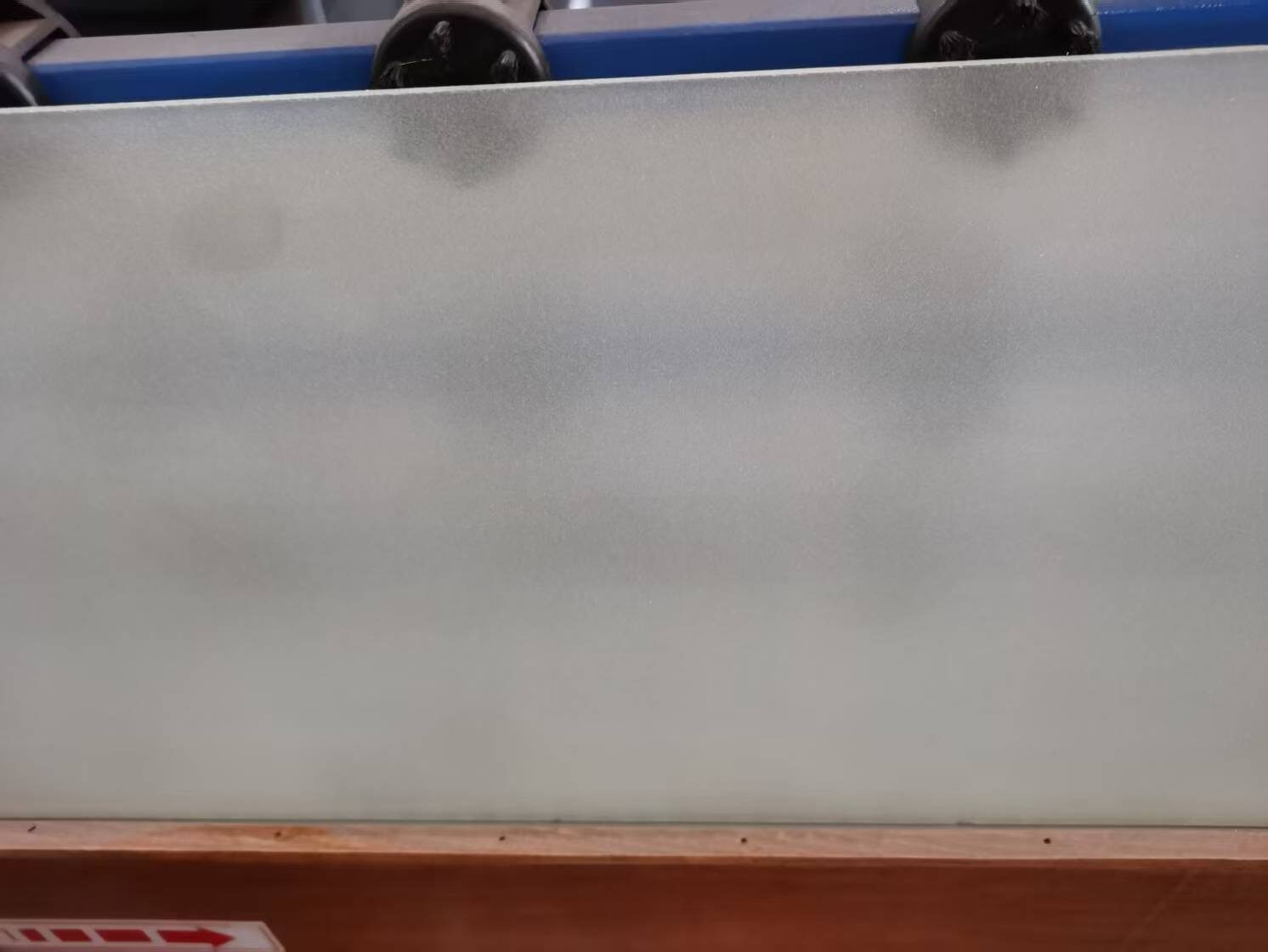
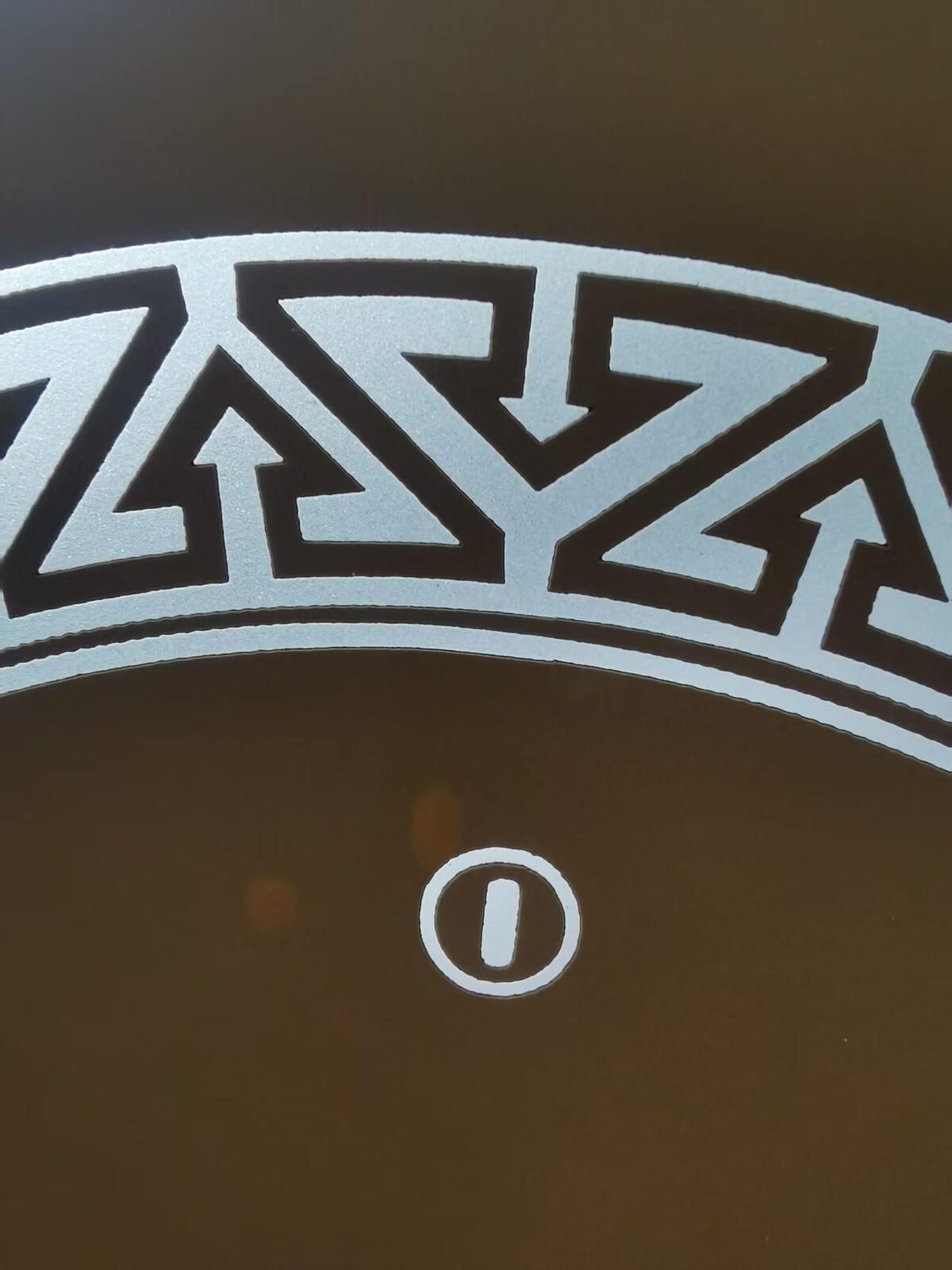
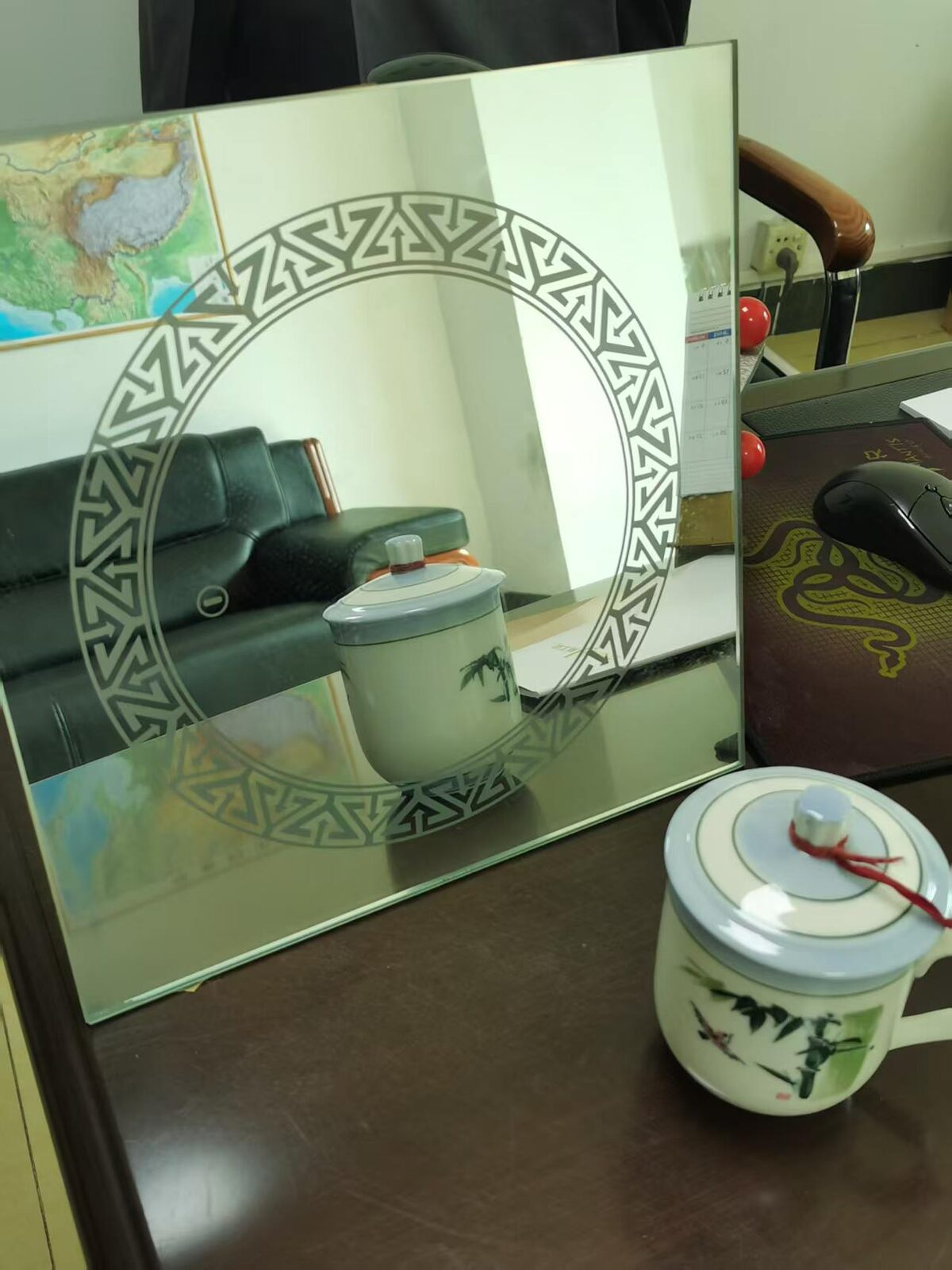
All of these were blasted on this machine. Full-surface frosting needs no film; patterns are cut from sandblast resist masking film on a plotter, applied, blasted, then peeled.
Frequently asked questions
Should I choose the vertical or the horizontal machine?
It depends on how your shop already moves glass. Choose vertical if you handle large architectural panels upright and floor space is tight. Choose horizontal if you run high volumes of flat, repetitive work and want simpler loading, particularly for smaller pieces. Tell us your typical panel sizes and monthly output and we will tell you which one actually fits.
What abrasive should I run?
Most glass frosting uses brown fused alumina in common grit sizes. Grit choice controls how fast you cut and how fine the finished texture looks. If you tell us the finish you are aiming for, we will recommend a starting grit rather than making you experiment through several bags.
Do I need a film cutting plotter as well?
Only if you do masked or partial designs. Full-surface frosting needs no film at all. For logos, patterns, or partial frosting you need masking film and something to cut it — that is what the film cutting plotter does. Many shops start with the sandblasting machine and add the plotter once decorative work grows.
What compressor do I need?
You need at least 3 m³/min (106 CFM) at 0.6–0.8 MPa (87–116 psi) — in practice a 22 kW / 30 HP compressor with a receiver of 1 m³ or larger, plus an aftercooler and oil/water separator. The requirement is identical for all three models. If you already own a compressor, send us the model and we will confirm it before you order.
How much glass can it process per hour?
Rated throughput is 25 m²/h (about 270 sq ft/h) on full-surface frosting, measured at 50 Hz, with masked areas counted as processed area. Real output depends on finish depth and how much of each panel you are actually blasting. Send us a representative job and we will estimate realistically rather than quote a best case.
Can I blast a panel taller than the machine’s rated glass height?
Yes, in two passes. The machines are open-top, so a panel taller than the rated height extends above the blast chamber rather than being blocked by it. Blast the lower portion, rotate the panel 180° end over end, then blast the remaining strip — a 2000 mm panel can be processed on a 1600 mm machine this way. The one thing to manage is the overlap: blasted glass etches cumulatively, so feather the joint with lower pressure or faster travel to avoid a visible band, and test on scrap first. It works best for full-surface frosting; masked patterns that cross the joint need careful registration. For regular oversize work, a taller model is the better answer — see Blasting panels taller than the machine’s rated height under Models above.
Can it handle tempered or coated glass?
Sandblasting is a surface abrasion process and works on most flat soda-lime glass. Coated and low-E products need care, because blasting will damage the coating unless that is your intent. Tell us the specific glass you run and we will confirm suitability.
Ready to discuss your glass processing line?
Send glass size, process type, production volume, and destination country. We will recommend a practical configuration and quotation.
Related guides
- Vertical vs Horizontal Glass Sandblasting — which orientation suits your shop
- How to Choose a Glass Sandblasting Machine — the five questions that decide which model fits
- What Does a Glass Sandblasting Machine Cost? — what drives the price, including freight and duties
- Abrasive Grit Size Chart — 24# to 120#, and the finish each produces
- Air Pressure and Nozzle Settings — pressure, travel speed and why banding happens