Glass film cutting equipment
Vertical Glass Film Cutting Plotter
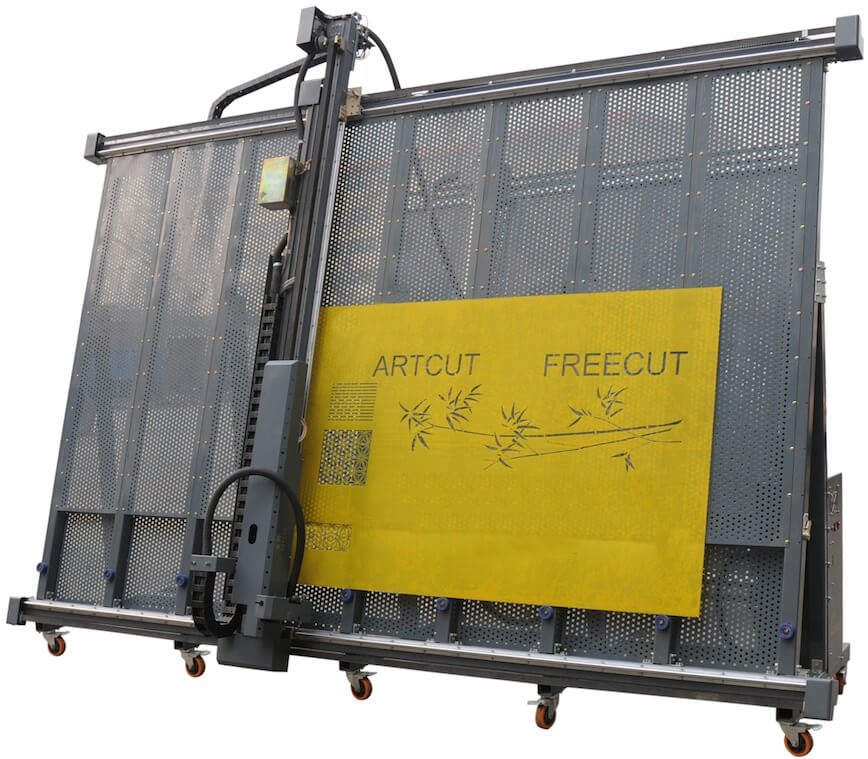
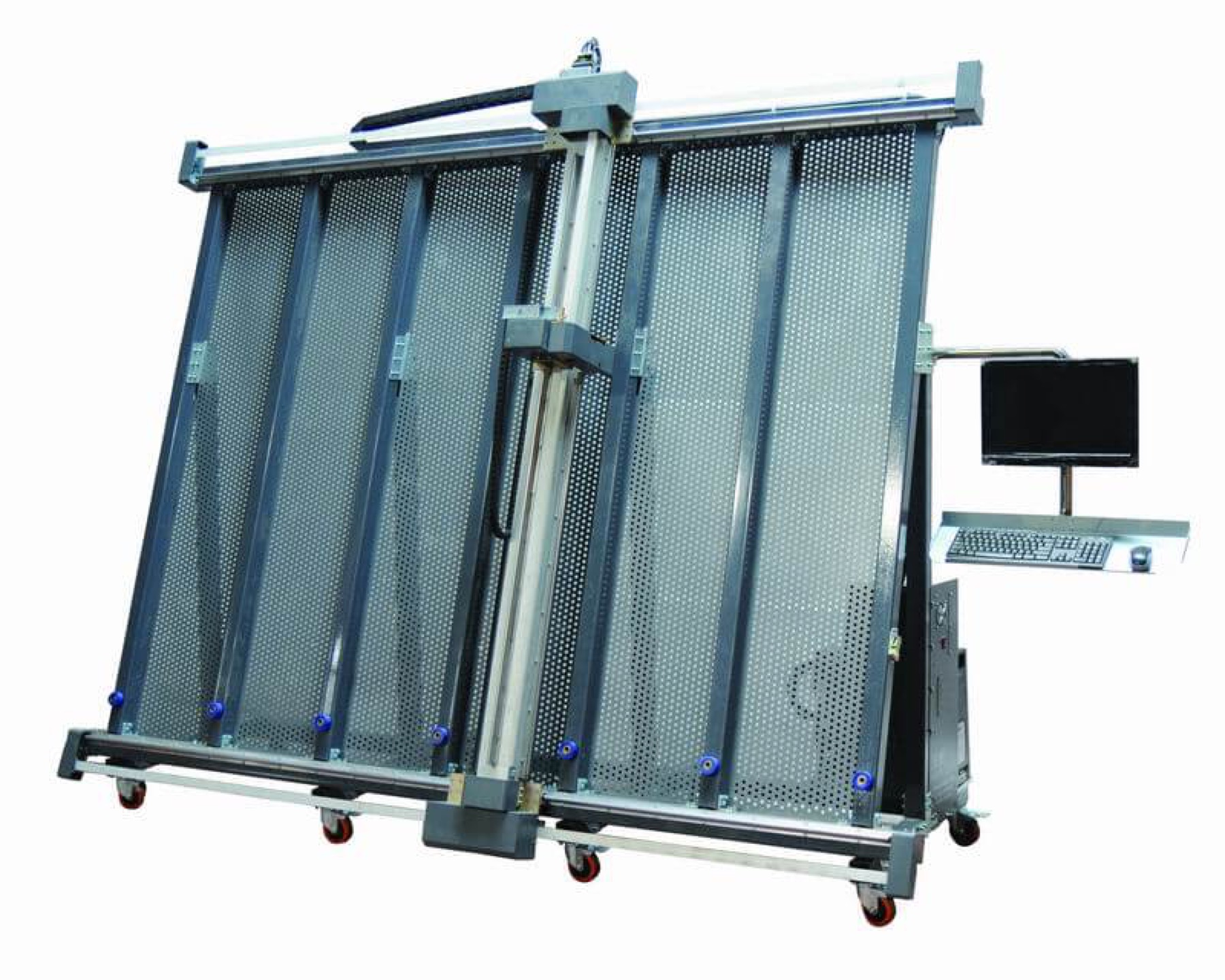
A vertical blade, pen, and optional laser cutting plotter for decorative glass masking film. It is designed for sandblast patterns, privacy film, and repeatable glass decoration layouts.
What this plotter is for
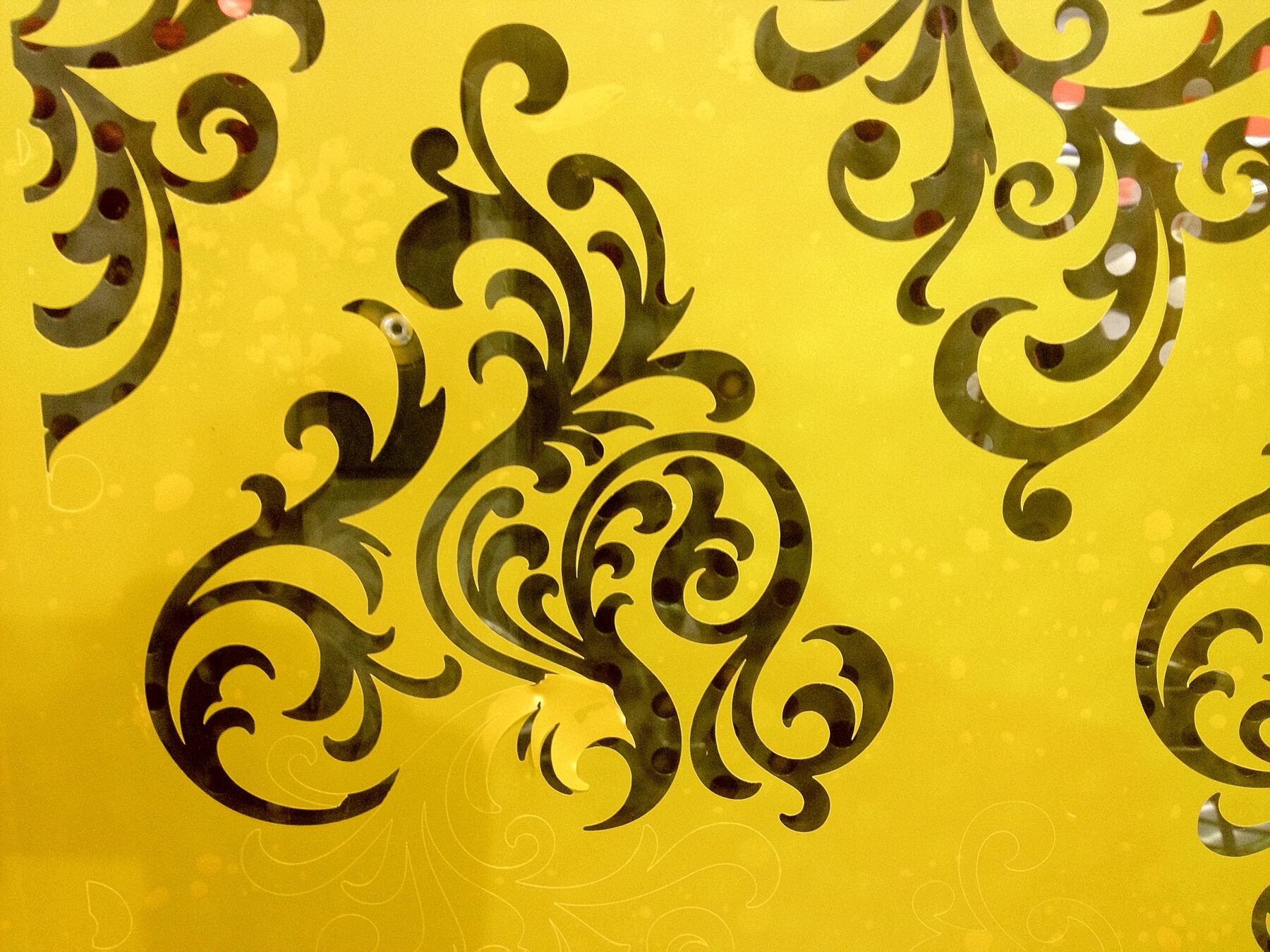
This is a cutting plotter built around glass decoration work. Its job is to turn a design file into a precisely cut stencil in sandblast resist masking film, which then goes onto the glass before blasting.
The vertical format matters practically: an upright machine takes far less floor area than a flatbed of equivalent working width, which is usually the constraint in a working glass shop rather than the machine price.
Typical work
- Sandblast resist stencils for frosted logos, patterns, and partial designs
- Vinyl templates and layout masks
- Decorative film for privacy and architectural glass
- Repeat production of the same design across many panels
Applications
- Cutting sandblast resist masking film on glass
- Decorative frosted glass patterns
- Privacy film and vinyl template cutting
- Mirror and partition glass decoration
- Small-batch custom glass artwork
Blade, pen, or laser
The head configuration determines what the machine can do. Blade cutting is the standard for film and vinyl. A pen option lets you plot layout lines and registration marks directly. Laser configurations are available where the application calls for it.
If you are unsure which configuration you need, describe the work you intend to produce. Configuration is decided at order time and is not something you want to get wrong.
The pen option has a use we did not plan for. With a pen in the head instead of a blade, the machine plots artwork at full canvas scale onto paper or canvas — one customer bought a machine and has never cut a stencil with it. See using this plotter as a large-format drawing machine.
Main Features
Vertical glass workflow
Glass remains upright, saving shop floor space and matching common glass handling practice.
Blade, pen, and laser options
Choose blade cutting, pen plotting, or laser-assisted cutting depending on pattern detail and film type.
Large-format capability
Built for common architectural glass sizes including 1830 x 2440 mm and larger custom tables.
Practical spare parts
Blade holders, blades, belts, sliders, control cards, laser tubes, power supplies, chillers, and UPS options are available.
Technical Data
| Cutting method | Blade cutting; pen plotting; optional laser + blade two-in-one configuration |
|---|---|
| Typical working sizes | 1830 x 2440 mm, 2000 x 2440 mm, 2000 x 3300 mm; larger sizes by request |
| Main material | Sandblast resist masking film / PVC protective vinyl film |
| Blade life reference | One blade can cut about 30 pieces of 600 x 2000 mm glass, depending on film and pattern detail |
| Recommended options | Vector pattern library, water-cooled chiller for laser model, UPS for power protection |
Photos and Working Examples
Consumables and Support
We can supply cutting blades, blade holders, drive belts, linear sliders, CO2 laser tubes, power supplies, control cards, water chillers, and a vector graphic pattern library for daily production.
What comes with the machine
Wear parts for this machine are made to our own specification and come from the factory rather than a local industrial supplier. They are inexpensive, and they ship by air — typically 3 to 5 days door to door — so a worn part does not mean waiting on ocean freight. Details on Warranty & Support.
Warranty
Electrical components and motors carry a two-year warranty — twice the one-year term that is standard for this class of machine. Wear parts and consumables are not covered, and neither is damage from running the machine outside its stated operating limits.
Lead time and delivery
Built to order: typically 10–30 days production plus 20–30 days ocean transit. ArtCut handles customs clearance. See Shipping & Lead Times.
Support once it arrives
Installation guidance, operator training, and troubleshooting from the U.S. during U.S. business hours — phone, WhatsApp, or video.
Frequently asked questions
Do I need this if I already have a vinyl cutter?
Possibly not, for small work. A standard vinyl cutter will cut masking film for modest sizes. The case for a dedicated glass plotter is working width, upright footprint, and handling full-size architectural panels — if your work is large-format, a desktop cutter becomes the bottleneck quickly.
What software does it use?
It works from standard vector design files. Tell us what your team already designs in and we will confirm workflow compatibility before you order.
How fine a detail can it hold?
Detail is limited by film thickness and blade selection as much as by the machine. Thinner film holds finer detail but resists blasting for less time. Send us a representative design and we will advise on the film and blade combination.
Can it cut materials other than masking film?
It handles standard plotter films and vinyl. Tell us the specific material and we will confirm.
Ready to discuss your glass processing line?
Send glass size, process type, production volume, and destination country. We will recommend a practical configuration and quotation.
Related guides
- Glass Etching Workshop Equipment List — the full chain, in workflow order
- How to Choose a Glass Sandblasting Machine — the five questions that decide which model fits
- Sandblast Resist Film Thickness Guide — choosing between the five thicknesses