Glass film lamination equipment
Apply decorative, privacy, and safety film to flat glass
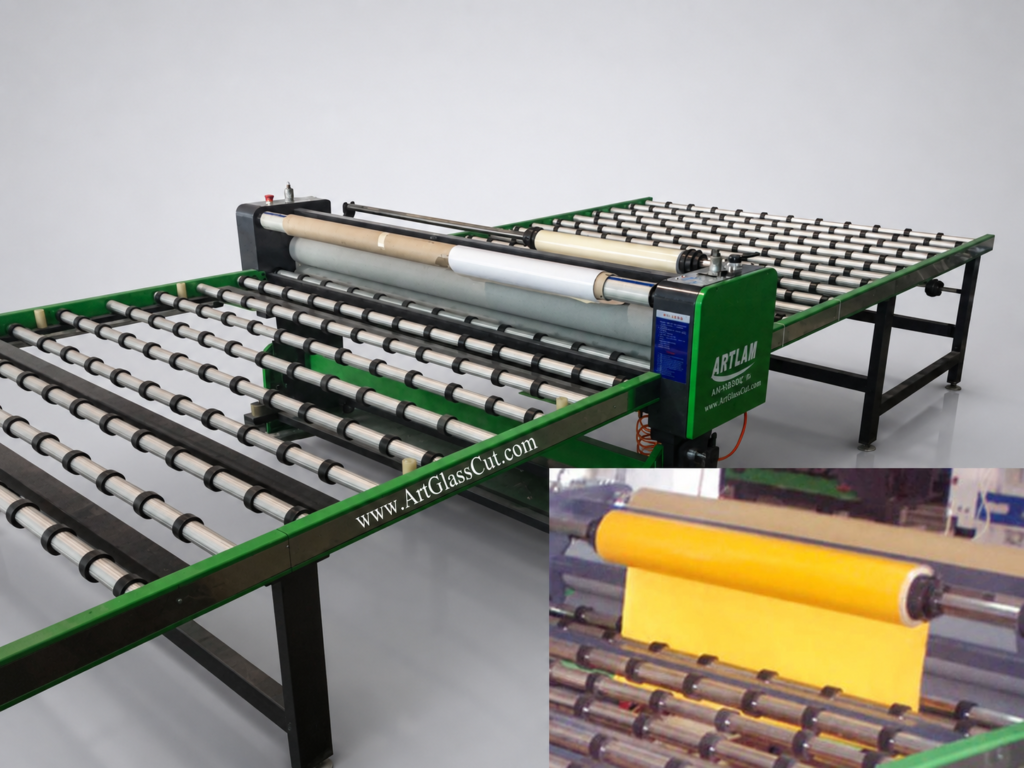
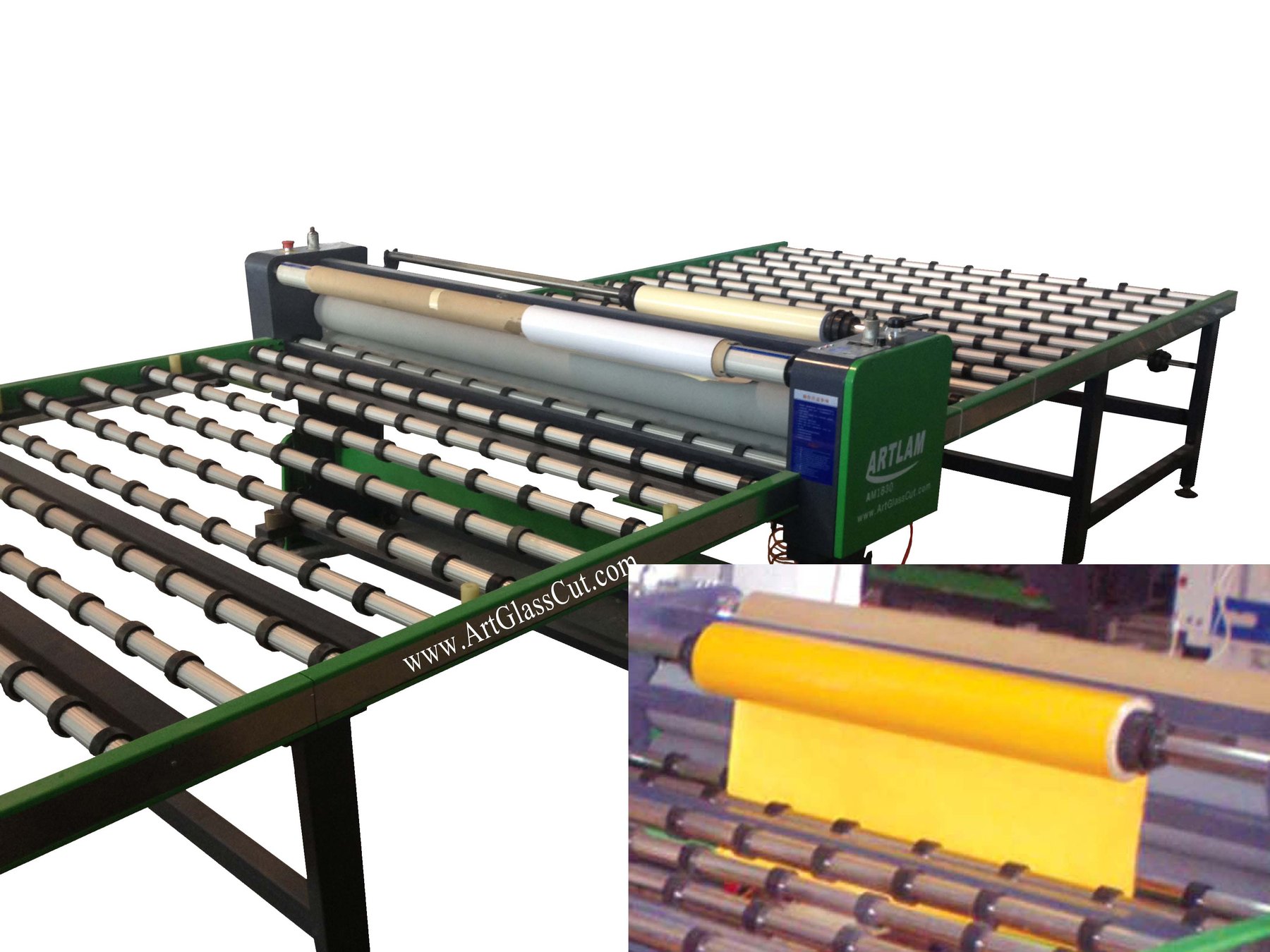
A heated flatbed laminator for applying decorative, safety, privacy, and protective films to architectural glass. It supports controlled pressure, infrared heating, and production widths from small shop formats to large glass panels.
What this machine is for
A flatbed laminator applies film to glass under controlled heat and pressure. The point of a machine rather than hand application is consistency: even pressure across the whole panel means no trapped air, no wrinkles, and no edges that lift three months later.
Hand-applying film to large panels is possible and it is also where most quality complaints originate. Above a certain panel size and volume, a laminator stops being a luxury.
Typical work
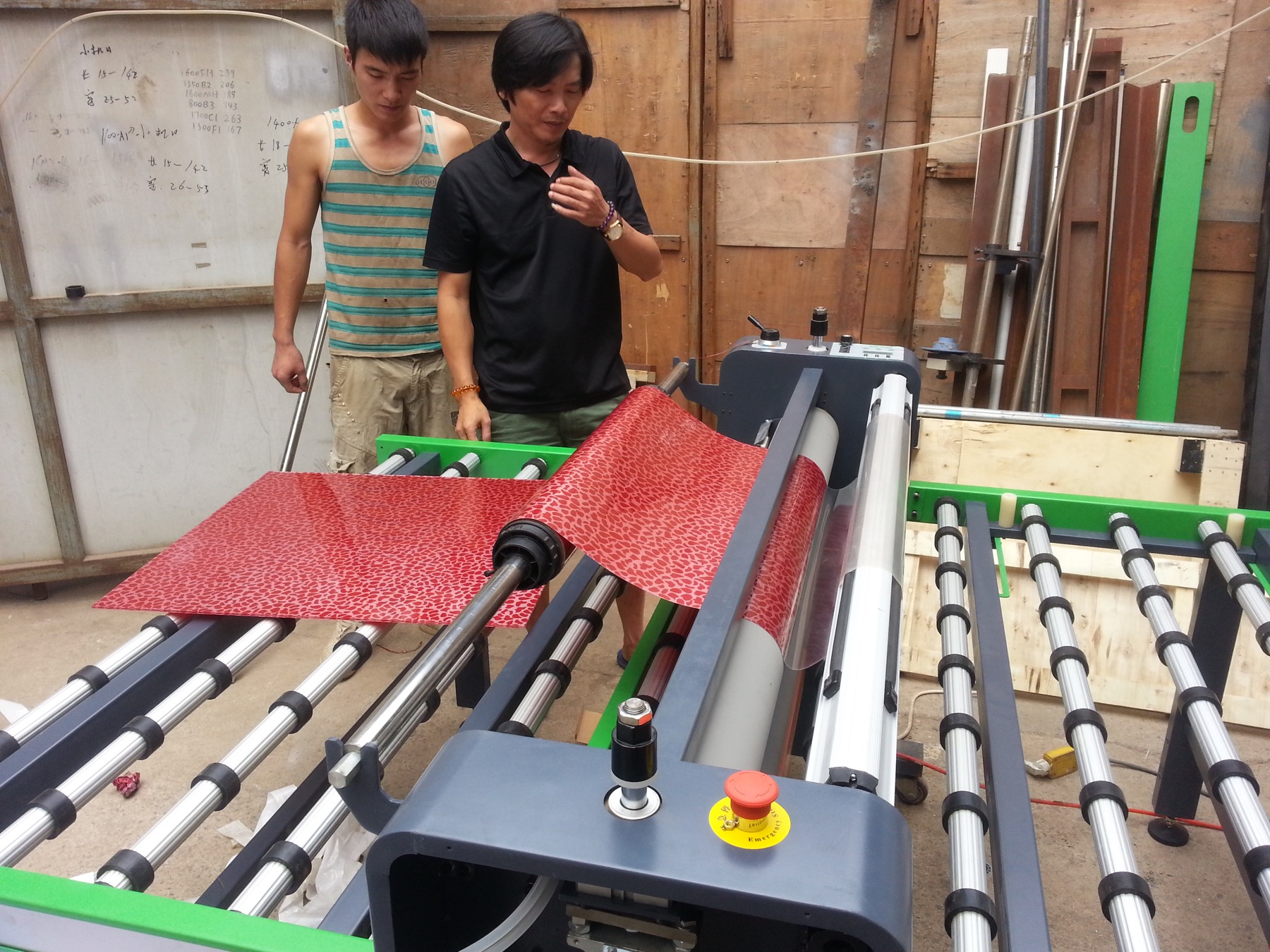
- Decorative and patterned film on architectural glass
- Privacy and frost-effect film as an alternative to sandblasting
- Safety and security film
- Protective film applied before further processing or shipping
Applications
- Decorative glass film lamination
- Privacy and frosted film application
- Safety film and protective film application
- Color film application before sandblasting
- Shop production for doors, partitions, mirrors, and panels
Heated rollers and adjustable pressure
Two variables control the result: roller temperature and pressure. Heat softens the adhesive so it flows into contact with the glass; pressure drives out air and sets the bond. Different films and thicknesses want different settings.
Once you establish settings for a given film, results become repeatable — which is the entire reason to move from hand application to a machine.
Film lamination versus sandblasting
Both produce a frosted appearance. Applied film is faster, reversible, and needs no blast equipment or dust handling, but it sits on the surface and can be damaged or removed. Sandblasting alters the glass itself and is permanent. Many shops offer both and let the application and budget decide.
Main Features
Hot lamination system
Infrared heating and silicone rollers improve film adhesion and reduce bubbles.
Adjustable pressure
Air-pressure height adjustment supports different glass thicknesses up to 25 mm.
Multiple working widths
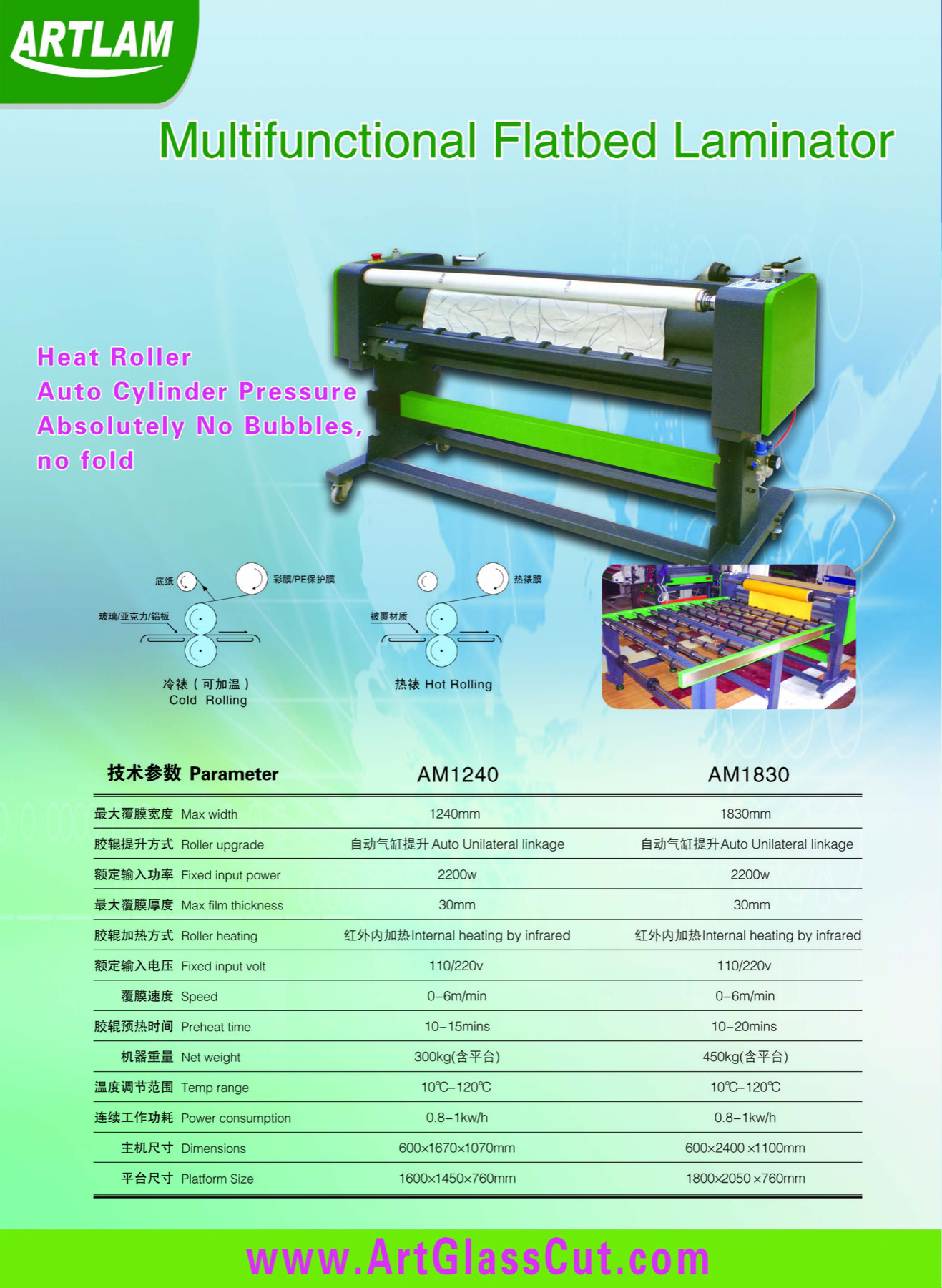
AM850, AM1240, AM1830, and AM2200 cover common glass shop sizes.
Fast warm-up
Typical preheat time is 5 to 15 minutes depending on ambient temperature and model.
Technical Data
| Model range | AM850, AM1240, AM1830, AM2200 |
|---|---|
| Maximum laminating width | 850 mm, 1240 mm, 1830 mm, or 2200 mm depending on model |
| Maximum glass thickness | Up to 25 mm |
| Lamination speed | Up to 6 m/min |
| Maximum temperature | 100 C / 212 F |
| Power | 110 V or 220 V configurations available |
Photos and Working Examples
Consumables and Support
Recommended consumables include decorative film, safety film, masking film, replacement silicone rollers, heating components, and routine electrical spares. We can help match the laminator width to your normal glass size.
What comes with the machine
Wear parts for this machine are made to our own specification and come from the factory rather than a local industrial supplier. They are inexpensive, and they ship by air — typically 3 to 5 days door to door — so a worn part does not mean waiting on ocean freight. Details on Warranty & Support.
Warranty
Electrical components and motors carry a two-year warranty — twice the one-year term that is standard for this class of machine. Wear parts and consumables are not covered, and neither is damage from running the machine outside its stated operating limits.
Lead time and delivery
Built to order: typically 10–30 days production plus 20–30 days ocean transit. ArtCut handles customs clearance. See Shipping & Lead Times.
Support once it arrives
Installation guidance, operator training, and troubleshooting from the U.S. during U.S. business hours — phone, WhatsApp, or video.
Frequently asked questions
What is the maximum panel size?
Working width is listed in the technical data above. Tell us the largest panel you regularly handle and we will confirm the right model.
Can it apply any brand of film?
It works with standard architectural and decorative films. Tell us what you use and we will confirm settings guidance.
How many people are needed to operate it?
Depends on panel size — large panels are generally a two-person load regardless of the machine. Give us your typical dimensions and we will be realistic about it.
Does it replace sandblasting?
For a frosted look, film is an alternative rather than a replacement. Film is faster and reversible; sandblasting is permanent and cannot be peeled off. Shops serving architectural clients often do both.
Ready to discuss your glass processing line?
Send glass size, process type, production volume, and destination country. We will recommend a practical configuration and quotation.
Related guides
- Glass Etching Workshop Equipment List — the full chain, in workflow order
- How to Choose a Glass Sandblasting Machine — the five questions that decide which model fits
- Sandblast Resist Film Thickness Guide — choosing between the five thicknesses