Glass sandblasting consumables
PVC masking film for computer-cut glass stencils
PVC sandblast resist masking film for decorative glass, frosted patterns, and protective stencil work.
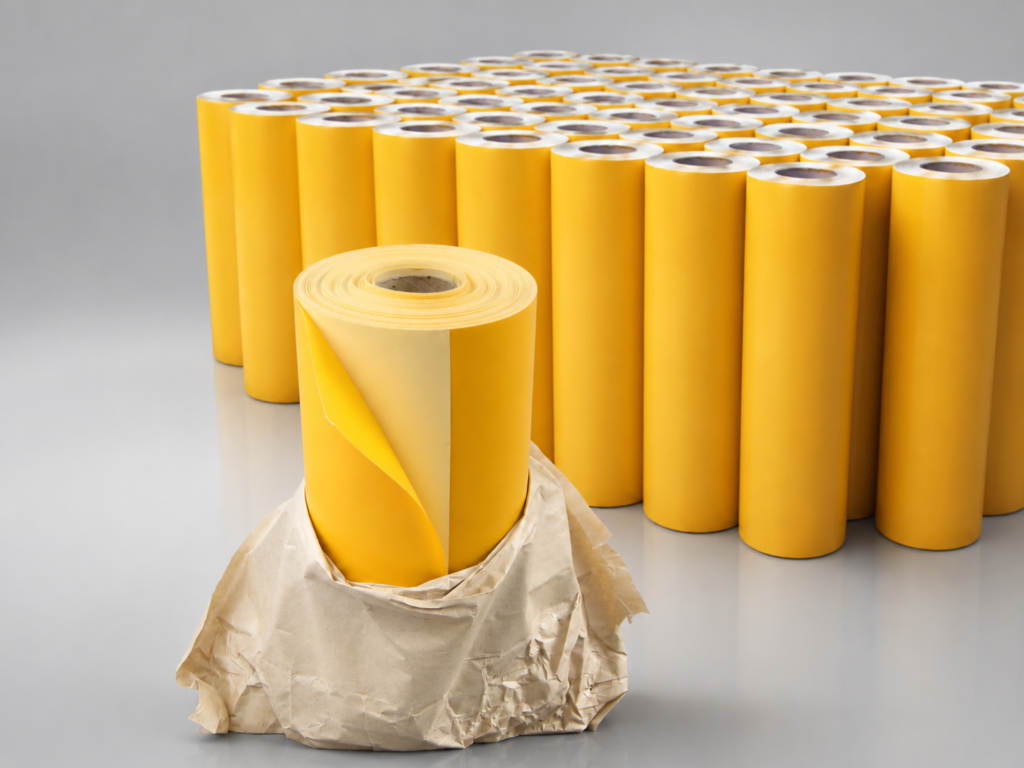
The short version: PVC computer-cut masking film for glass sandblasting — cut on a plotter, not exposed like photoresist. Five thicknesses (0.09 / 0.13 / 0.15 / 0.18 / 0.22 mm), yellow or white, 450–1200 mm wide, 50 m rolls. Wholesale minimum is 30 rolls per SKU.
Not sure which to order? Sample material is free — you only cover shipping. Test it on your own glass, your own cutter, your own abrasive before committing to anything.
We usually reply within one business day.
Computer-cut film, not photoresist
This is worth clarifying up front, because the two workflows are often confused and they suit very different shops.
Photoresist film is light-sensitive. You expose it through a positive, wash out the unexposed areas, and you get a stencil. It excels at very fine photographic detail and is the standard for awards, trophies, and personalized drinkware.
Computer-cut masking film — what this product is — goes on a plotter. You cut the design with a blade, weed away the parts you want frosted, and apply it to the glass. It is faster for production work, needs no darkroom or washout station, and scales to large architectural panels where photoresist becomes impractical.
If you are producing shower doors, partitions, signage, or decorative panels in a glass shop, computer-cut film is almost certainly the workflow you want. If you are engraving photographs onto award plaques, it is not.
What you need to use it
- A cutting plotter — a glass film cutting plotter or a standard vinyl cutter
- Application squeegee and weeding tools
- A sandblasting machine or blast cabinet
- Abrasive media suited to your target finish
Choosing a thickness
Thicker film resists abrasive for longer; thinner film conforms better and weeds finer detail. That trade-off is physics and it is consistent. What is not consistent between shops is the pressure, abrasive, and blast time you run — so treat the guidance below as relative positioning within our range, then confirm with a free sample on your own glass.
| Grade | Thickness | Approx. | Where it sits in the range |
|---|---|---|---|
| Fine Detail | 0.09 mm | ~3.5 mil | Thinnest option. Weeds the finest detail most cleanly. Best suited to short blast cycles. |
| General Purpose | 0.13 mm | ~5.1 mil | The everyday choice for standard frosting. Start here if you are unsure. |
| Standard Plus | 0.15 mm | ~5.9 mil | Standard work with more margin than 0.13 mm. |
| Extended Blast | 0.18 mm | ~7.1 mil | More abrasion resistance for longer blast cycles. |
| Heaviest in Range | 0.22 mm | ~8.7 mil | The thickest we make. Falls in the thickness class most US sandblast resist is sold at. |
Grade names are a shorthand for ordering — they describe where each sits in our range, not a tested performance rating. All five are available in yellow and white. Colour is a visibility preference — some operators find yellow easier to see when weeding intricate work against clear glass, others prefer white against darker backgrounds. Both are ordered as separate SKUs.
Technical Data
| Application | Glass and mirror sandblasting |
|---|---|
| Face material | Flexible PVC film |
| Colours | Yellow and white (ordered as separate SKUs) |
| Adhesive | Solvent-based acrylic copolymer, pressure-sensitive |
| Application type | Temporary masking — removed after sandblasting |
| Available thickness | 0.09 mm (~3.5 mil) · 0.13 mm (~5.1 mil) · 0.15 mm (~5.9 mil) · 0.18 mm (~7.1 mil) · 0.22 mm (~8.7 mil) |
| Thickness definition | Combined PVC and dried adhesive, excluding release liner |
| Standard roll length | 50 m (~164 ft / ~55 yd) |
| Minimum order | 30 rolls per SKU |
| Common widths | 450 mm (~17.7 in) · 600 mm (~23.6 in) · 900 mm (~35.4 in) · 1200 mm (~47.2 in) |
| Release liner | 80 g/m² standard paper liner; heavier options up to 160 g/m² on qualifying custom orders |
| Preferred storage | 18–25°C / 64–77°F |
| Maximum storage | Avoid prolonged storage above 30°C / 86°F |
| Optimum-use period | Within 8 months of manufacture |
| Maximum recommended period | Up to 12 months under suitable storage conditions |
| Samples | Material normally free; customer pays shipping |
| Volume pricing | 5% may apply above 50 rolls of the same SKU |
How we measure thickness. The values above are the combined thickness of the PVC film and the dried adhesive layer, excluding the release liner. Suppliers do not all measure the same way — some quote face film only, which makes a nominally similar number represent a physically different material. If you are comparing against another product, check which definition it uses before assuming they are equivalent.
The range spans light detail work through to heavier blasting. At the top end, 0.22 mm is roughly 8.7 mil — the thickness class most sandblast resist sold in the United States falls into. At the bottom end, 0.09 mm is thin enough to weed very fine detail cleanly. If you are running sustained high pressure or unusually long blast cycles, request a sample and test it before committing.
Request a free sample
Masking film behaves differently depending on your glass, your cutter, your abrasive, and your blast pressure. No specification sheet can tell you how it will perform in your shop — so test it before you commit to a roll.
Sample material is free. You cover shipping. We can send it prepaid and invoice the freight, or ship collect on your own carrier account, whichever you prefer.
Tell us which thicknesses you want to try and roughly what you produce. If you already know your abrasive and working pressure, include that too — it helps us send the right thing rather than a generic swatch.
Two ways to buy
We are building toward single-roll orders shipped from U.S. stock. That is not live yet, so here is exactly where things stand today rather than a vague promise.
| Available now | Coming next | |
|---|---|---|
| Minimum order | 30 rolls per SKU | 1 roll |
| Lead time | 6–8 weeks (built to order) | 3–5 days (U.S. domestic) |
| Best for | Distributors, private label, large production shops | Glass shops buying as they go |
| Status | Ordering now | Opens once first U.S. stock lands |
Available now: wholesale, built to order
Minimum 30 rolls per SKU. A SKU is a specific combination of colour, thickness and width, so 30 means 30 of the same item — different specifications are produced separately and cannot be combined toward the minimum.
For scale: 30 rolls of 600 mm x 50 m is roughly 900 m² of film. Orders exceeding 50 rolls of the same SKU may qualify for a 5% discount, also counted per SKU.
This suits distributors, private-label buyers, and shops with steady enough throughput to plan 6–8 weeks ahead.
Coming next: single rolls from U.S. stock
Most glass shops do not want 30 rolls. They want two, and they want them next week. We know that, and it is what we are building toward.
The sequence is deliberate: we use sample requests to work out which thickness, width and colour people actually ask for, then bring that specification into U.S. stock and open single-roll ordering on it. Stocking against real demand rather than guesswork is also what keeps the film you receive fresh, since it has a defined best-use period.
Requesting a sample is how you influence what we stock first. The form asks which thicknesses you want to test and roughly how much you expect to use — that is not a sales screen, it is the input to the stocking decision.
Already reordering regularly?
Once we know your consumption pattern — which SKU, how many, how often — we will hold inventory in the U.S. matched to your cycle, so your resupply ships domestically instead of waiting on production and ocean freight.
How pricing works
Price per roll depends on thickness, width and quantity. Tell us the SKU and quantity and we will quote landed pricing including freight. If you are comparing against another supplier, tell us what you pay now and we will be straight about whether we can beat it.
Before committing to any quantity, request a free sample. Material is free; you cover shipping.
Lead times, and how we can stock for you
We will be straight about this rather than let you find out after ordering.
First orders are built to order
This film is produced to your specification, not pulled off a shelf. For a first order, plan on roughly 6–8 weeks from confirmation to delivery: production, ocean freight, customs clearance, then domestic transit to you.
That is a real timeline and we would rather state it plainly than promise something faster and miss it. For a planned wholesale purchase it is usually workable — what it does not suit is running out mid-job and needing film next week. Which brings us to the useful part.
If you reorder on a regular cycle, we will hold stock for you
Once we know what you actually consume — which SKU, how many rolls, how often — we will carry inventory in the United States matched to your reorder rhythm. Your resupply then ships domestically instead of waiting on production and ocean freight.
This is not a generic promise of “fast shipping.” It is a specific arrangement built around your consumption:
- You tell us your usage pattern — roughly how many rolls of which SKU, and how often you reorder.
- We stock to that pattern and hold it in the U.S. against your account.
- Your reorders ship domestically, so resupply stops being a two-month exercise.
- We rotate by lot date, so you are always sent the freshest material rather than whatever has been sitting longest.
The reason we ask about expected volume on the sample form is exactly this. It is not a sales qualification exercise — it is what makes stocking possible. Guessing what to hold in a warehouse produces expired film and nobody benefits from that.
Why this matters for a material with a shelf life
Masking film has a defined best-use period, so carrying a warehouse full of every thickness and width “just in case” would mean shipping you material that has already spent months in storage. Stocking against real, known demand keeps turnover fast and means the film you receive is fresh. It is better for you and it is the only version of stocking that actually works.
If you are still evaluating, start with a free sample. Samples move quickly and cost you nothing but shipping.
Applications
- Masking before glass sandblasting
- Computer-cut decorative glass stencils
- Privacy patterns and frosted designs
- Protection film during glass processing
- Custom logo or pattern stencil work
How to get clean results
Most masking failures come down to three things: adhesion, blast pressure, and film thickness. They are all controllable.
Adhesion
Glass must be genuinely clean and dry before application. Any residue, dust, or moisture under the film becomes a place where abrasive creeps beneath the edge and blurs your line. Apply from the centre outward with a squeegee to push air out rather than trapping it.
Blast pressure
Higher pressure cuts faster but is harder on the mask. If edges are lifting or details are undercutting, dropping pressure and taking a little longer usually produces a sharper result than fighting it with a thicker film.
Film thickness
Thicker film resists abrasive longer and holds up better over extended blast times. Thinner film conforms more closely and is easier to weed on intricate designs. For fine detail work, 0.09 mm weeds most cleanly; 0.13 mm is the usual all-round choice for standard frosting; 0.15 mm gives the most margin when blast times run longer.
Tell us what you are producing and at what pressure, and we will recommend a thickness rather than leaving you to buy two rolls and find out.
Main Features
Built specifically for glass sandblasting
A flexible PVC mask made for plotter-cut stencils on glass and mirror — not a general-purpose protective film adapted to the job.
Multiple thickness options
Five thicknesses from 0.09 mm (~3.5 mil) up to 0.22 mm (~8.7 mil), in yellow or white — PVC plus dried adhesive, excluding liner.
Flexible roll sizes
Widths and roll lengths can be matched to cutting plotter and glass size.
Custom backing paper
Custom logo printing on backing paper is available for branded supply.
How to specify what you need
Each roll is identified by colour, thickness, width and length, so reordering does not depend on remembering which one you had last time:
| Element | Options |
|---|---|
| Colour | Yellow (Y) or White (W) |
| Thickness | 090 / 130 / 150 / 180 / 220 — in microns |
| Width | 450 / 600 / 900 / 1200 mm (~17.7 / 23.6 / 35.4 / 47.2 in) |
| Length | 50 m standard (~164 ft / ~55 yd) |
So a yellow 0.13 mm roll, 600 mm wide, 50 m long is Y130-600-50. Every roll ships labelled with its code, lot number and manufacturing date — quote the code when reordering and there is nothing to describe.
Note on widths. These are metric sizes. 450 mm is approximately 17.7 in, not a true 18 in; 1200 mm is approximately 47.2 in, not 48 in. If you are matching an existing cutter or work table set up in inches, check the difference matters for your setup before ordering.
Storage and best-use period
Store the material in its original packaging in a clean, dry indoor location away from direct sunlight. Maintain a storage temperature of 18–25°C / 64–77°F and avoid prolonged storage above 30°C / 86°F. A hot warehouse in summer is the most common cause of film that stops behaving the way it did when you first tested it.
For optimum cutting, adhesion, blast resistance, and clean removal, use the material within 8 months of the date of manufacture. Stored correctly, it may remain usable for up to 12 months.
Beyond 12 months, performance can decline more noticeably. What tends to change first is not obvious on the roll — adhesion, removal behaviour, adhesive residue, PVC flexibility, weeding, liner flatness, and edge lifting during blasting. Older stock is not automatically unusable, but test it on scrap before running it on customer glass.
Every roll is labelled with its lot number and manufacturing date so you can check age at a glance rather than guessing from when it arrived.
Photos and Working Examples
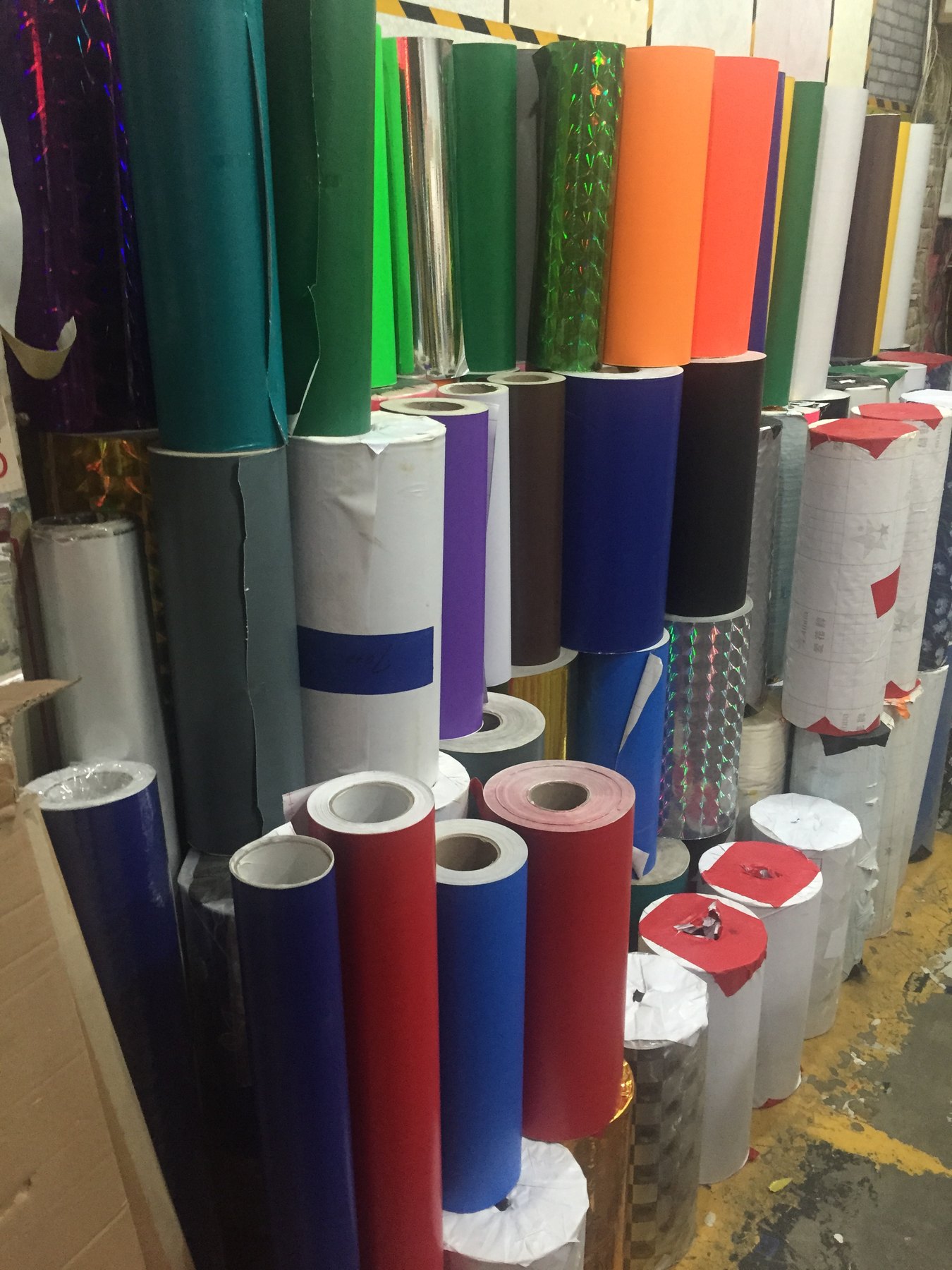
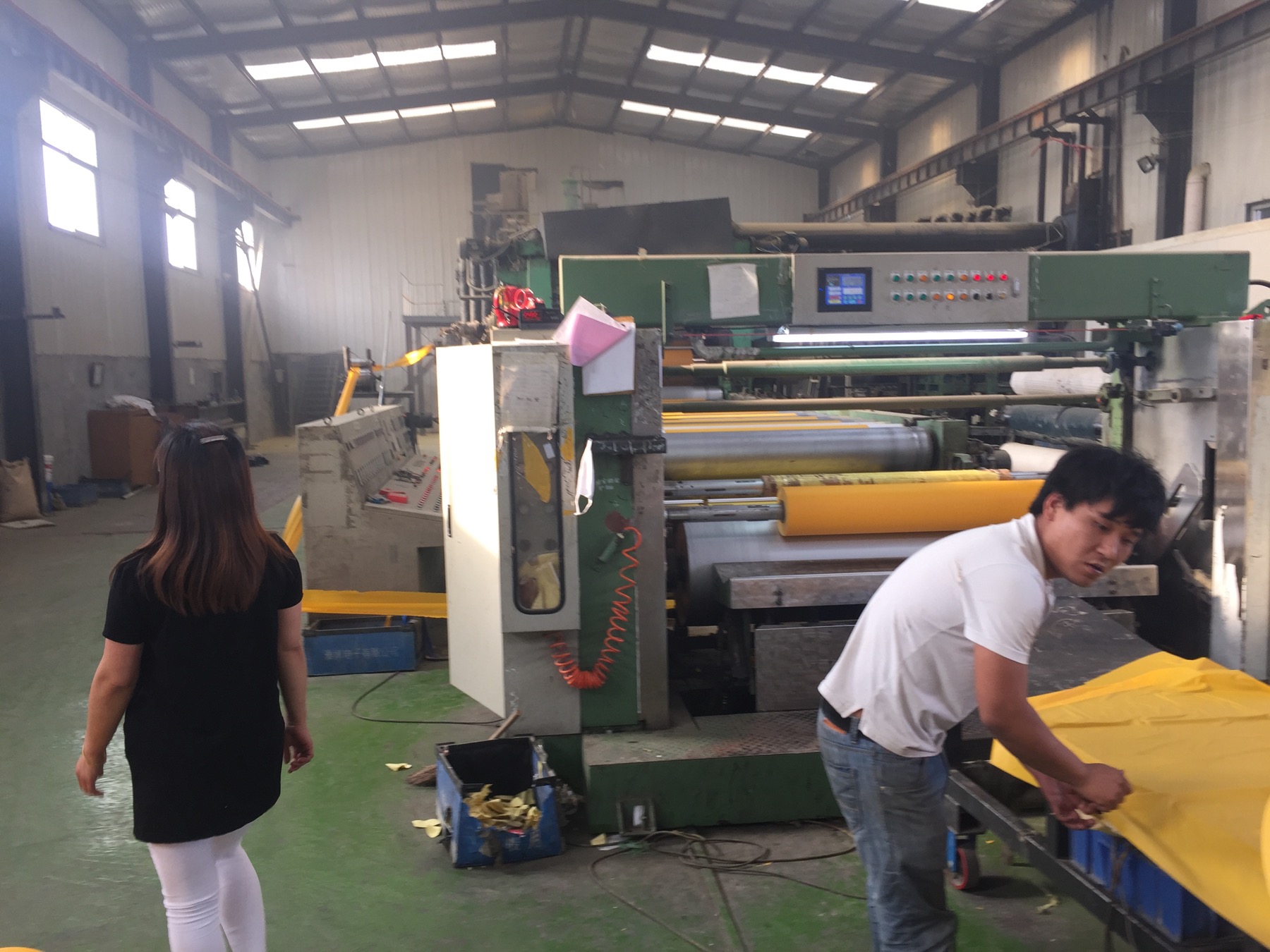
Consumables and Support
For best cutting and blasting performance, choose thickness and adhesive by abrasive pressure, pattern detail, glass size, and whether the film will be removed shortly after processing.
Frequently asked questions
Will this work with my existing vinyl cutter?
Generally yes. It is designed to be cut on standard plotters. Tell us the make and model you run and we will confirm, plus suggest a starting blade depth and force so you are not wasting material on test cuts.
What thickness should I order?
Five, from 0.09 mm (~3.5 mil) to 0.22 mm (~8.7 mil), all measured as PVC plus dried adhesive without the liner. As a starting point: 0.13 mm is the usual all-round choice for standard frosting, 0.09 mm weeds the finest detail, and 0.22 mm is the heaviest we make. Rather than deciding from a number, request a free sample of two thicknesses and compare them on your own glass.
How long can it stay on the glass before blasting?
It is designed to be applied and blasted within a normal production cycle. If your workflow involves masked glass sitting for extended periods before blasting, mention it — storage conditions affect adhesive behaviour and we can advise.
Can I use it on curved or textured glass?
Flat glass is the standard application. Gentle curves are usually manageable; heavily textured surfaces are difficult because the film cannot seal against the low points, and abrasive will creep underneath. Send us a photo of the surface if you are unsure.
Do you sell the plotter as well?
Yes. The vertical glass film cutting plotter is built for exactly this workflow. Buying film and plotter together means we can confirm the combination works before anything ships.
Can I get a sample before ordering a roll?
Ask when you request a quote. It is a reasonable request for a consumable you will be buying repeatedly, and we would rather you confirm the film suits your process first.
What adhesive does it use, and will it leave residue?
A solvent-based acrylic copolymer pressure-sensitive adhesive, designed as a temporary mask that comes off after blasting. Clean removal depends on real conditions — how long the film has been on the glass, temperature, how clean the glass was at application, and the age of the material. We will not promise residue-free removal under every condition, because no honest supplier can. Test your own combination first.
How long is a standard roll?
50 m (~164 ft / ~55 yd) is the standard length. Common widths are 450, 600, 900 and 1200 mm (~17.7, 23.6, 35.4 and 47.2 in). Note those are metric widths — 450 mm is about 17.7 in, not a true 18 in, which matters if you are matching an existing cutter setup.
How old can the film be and still work?
Use within 8 months of manufacture for best results; up to 12 months if stored properly at 18–25°C. Every roll carries a lot number and manufacturing date, so you can check rather than guess. Past 12 months, test on scrap first — adhesion and clean removal are usually what degrade before anything is visible on the roll.
Can I get a heavier release liner?
The standard liner is 80 g/m². Heavier liners up to 160 g/m² are available on qualifying or custom orders — worth asking about if you are running high-speed plotter work where liner flatness matters. Mention it when you request a sample.
Ready to discuss your glass processing line?
Send glass size, process type, production volume, and destination country. We will recommend a practical configuration and quotation.
Related guides
- Glass Etching Workshop Equipment List — the full chain, in workflow order
- How to Choose a Glass Sandblasting Machine — the five questions that decide which model fits
- Sandblast Resist Film Thickness Guide — choosing between the five thicknesses
- Abrasive Grit Size Chart — 24# to 120#, and the finish each produces